Cannabis & dispensary
Security cameras for San Diego cannabis dispensaries
For a licensed cannabis premises, video surveillance is a condition of holding the licence — not a security preference. We design and install to the Department of Cannabis Control standard and document it.
Cannabis
On a licensed premises the camera system is a licence condition
Every other vertical we work in buys security because of risk. Cannabis operators buy it because of risk and law together. The surveillance system on a licensed premises is a regulatory obligation before it is a security preference, which changes what the design has to prove and changes what happens if it falls short.
The controlling regulation is California Code of Regulations, title 4, section 15044, administered by the Department of Cannabis Control. It names the areas that have to be covered and sets the retention period, and those two facts drive the whole design rather than sitting alongside it. Ninety days of continuous recording is a storage sizing problem first — resolution, frame rate and camera count all trade against it, and a system specified without doing that arithmetic is the usual way an operator discovers a shortfall.
Regulations change. We design to the requirement in force at the time of install and confirm it against the regulation text then, rather than against a page written earlier. If your existing system was installed by somebody who treated the standard loosely, a takeover survey establishes where it currently falls short and what it takes to close the gap.
Limited access areas, the vault, the sales floor, the point of sale and both sides of the entry each have a defined job here. So does producing footage on request, which is a practical process worth testing before somebody asks you to do it under time pressure.
That is with us. We will come back to arrange a survey. If it is urgent, call (858) 222-7547.
- CSLB C-7 #976737
- BSIS ACO #7501
- CMMC certified
- SAM.gov registered
- Est. 2008
Why this is different
Your camera system is part of your licence
Every other vertical we work in buys security because of risk. Cannabis operators buy it because of both risk and law. The surveillance system on a licensed premises is a regulatory obligation with specified minimums, and the consequence of getting it wrong is not only an unrecovered incident — it is an exposure on the thing your business depends on.
The controlling regulation is California Code of Regulations, title 4, section 15044, administered by the Department of Cannabis Control. Verified against the regulation text on 25 August 2026, it requires the surveillance system to record continuously 24 hours a day, at a minimum of 1280 x 720 pixels and a minimum of 15 frames per second, with recordings kept for at least 90 calendar days, time measured to US National Institute of Standards and Technology standards, and a failure-notification system that tells you when the system is interrupted or has failed. The § 15044 readiness checker runs a proposed or existing system against those minimums.
Regulations change. This page reflects the text as verified on 25 August 2026; we design to the requirement in force at the time of install and confirm it against the regulation then. We are a security contractor, not your lawyer or your compliance consultant.
Minimums, not targets
Compliant and still disappointing
Those figures are floors, not specifications to aim at. A system built exactly to the minimum is compliant and frequently still disappointing — 15 frames per second at 1280 x 720 will satisfy the regulation and may not identify the person at your counter.
The design question is where you exceed the minimum deliberately and where the minimum genuinely suffices.
Positions specified against a job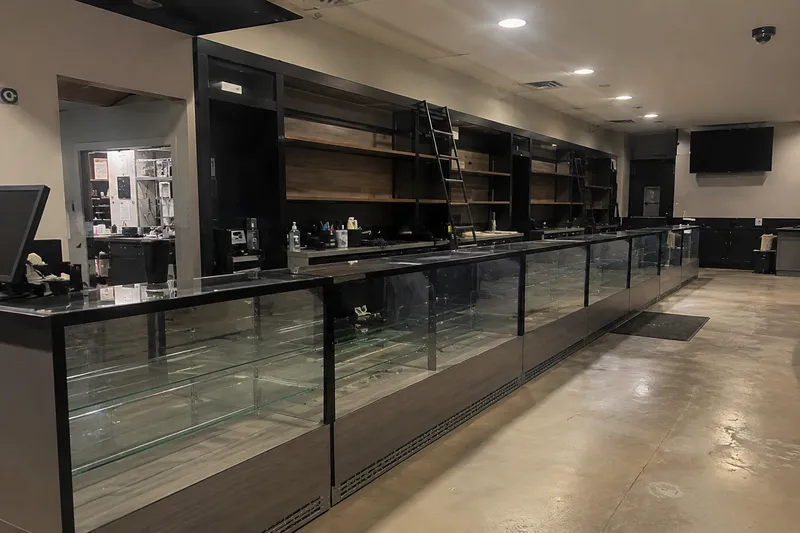
What the regulation requires covered
The areas section 15044 names
Six coverage obligations, taken from the text of § 15044(a).
Where product is handled
Areas where cannabis or cannabis products are weighed, packed, stored, loaded and unloaded for transportation, prepared, or moved within the licensed premises. In a retail operation that language reaches further than people expect — it follows the product.
Limited-access areas
The areas your licence restricts to authorised personnel. These have to be covered without gaps, which makes camera placement and the physical boundary of the area the same design conversation rather than two.
Security rooms
Named explicitly in the regulation, and frequently the room operators forget to cover because it is where the security system lives.
The recording equipment itself
Areas storing a surveillance-system storage device, with at least one camera recording the access points to the secured recording area. The recorder has to be watched, so that anyone reaching it is on video.
Entrances and exits, inside and out
Recorded from both indoor and outdoor vantage points. This is the requirement most often half-met on systems we assess: an indoor camera on the door, nothing covering the approach outside it.
The retail floor and the counter
Not named as such in the regulation, but a dispensary's sales floor and counter are places product is stored and moved, so they fall inside the categories above — and local permit conditions commonly address them directly. We ask to see your local conditions.
Retention and storage
Ninety days is a storage design problem
Ninety calendar days of continuous 24-hour recording across every required camera is a large and entirely predictable quantity of disk. It is also the requirement most often configured correctly and delivered incorrectly: a recorder set to 90 days that is silently overwriting at sixty because the storage was sized for a camera count that has since grown.
The infrastructure underneath is part of the same problem: cameras are PoE devices on data cabling, and a system this size is a network design as much as a camera design. That side is covered under structured cabling, and the camera design itself under commercial security camera installation.
Retention drives the design
The day somebody asks for day-eighty-nine footage
Camera count, resolution above the minimum, frame rate and scene activity all feed the calculation, and the honest version of that conversation includes telling you when a proposed camera count and a proposed retention period do not fit the storage being quoted.
At commissioning we verify the system is achieving the retention it is configured for, not trusting the configuration screen. That distinction only matters once, and it matters completely.
How retention is actually calculated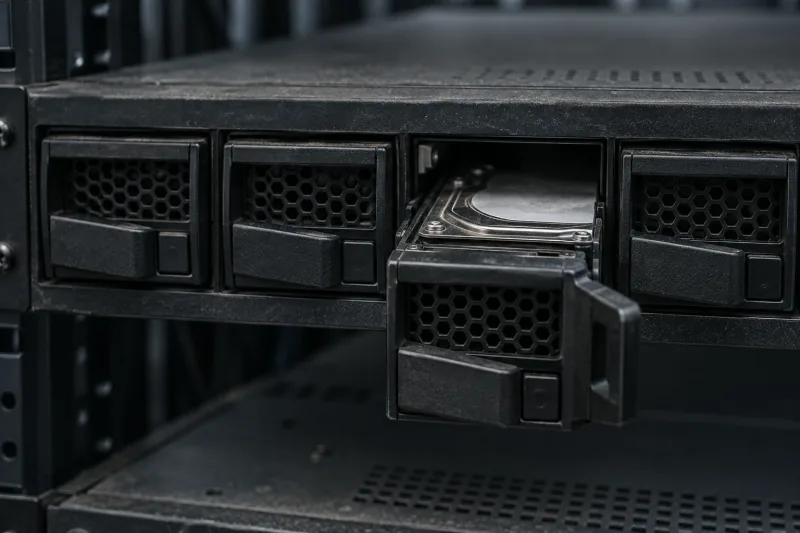
Beyond the cameras
Limited access, alarms and the empty hours
Cameras record who was there. They do not control who gets in, and on a licensed premises the limited-access requirement is about control as much as evidence:
- Controlling limited-access areas. Credentials on the doors into restricted areas, revocable the day somebody leaves, with a record of who entered and when. That record pairs with the footage to answer a question the footage alone cannot. That is commercial access control.
- Intrusion detection you can verify. A monitored alarm with cameras covering the detection zones, so an activation can be checked, not guessed at before anyone is dispatched. That is commercial alarm monitoring.
- The hours the premises is closed. Where a site needs a response — particularly for standalone buildings and rear approaches — an operator watching during closed hours. That is remote video monitoring.
- Keeping it working. The regulation requires failure notification; what makes that useful is somebody acting on it. Drives are consumables, lenses collect dust, and retention drifts. That is CCTV maintenance and repair, and on a regulated premises it is not optional.
On audio: § 15044 governs video, and recording audio raises a separate question under California's all-party consent law. We design camera systems without audio capture unless you have taken your own advice and asked for it deliberately.
When it is asked for
Producing footage
The regulation requires you to provide copies of recordings to the Department on request, within the time the Department specifies. That is a procedural obligation as much as a technical one, and it fails for procedural reasons: the one person who knew how to export has left, the export needs proprietary software the recipient does not have, or the recorder clock drifted and the timestamps no longer line up with the request.
We document the export procedure at handover, give your team their own administrator access, and set time synchronisation properly.
Keeping an existing system exportable: maintenance and repair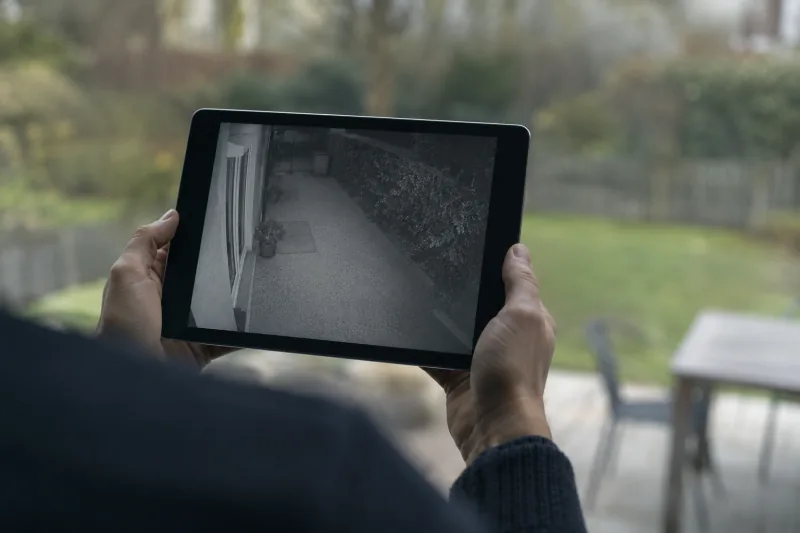
San Diego
Taking over a system that falls short
Where we are brought into an existing premises, it is usually because something in the system does not stand up. The recurring findings:
- Cameras below the minimum resolution or frame rate, often mixed in among compliant ones after a partial upgrade.
- Entrances covered from indoors only, missing the outdoor vantage point the regulation requires.
- Retention configured at ninety days and actually achieving less, because storage was sized before cameras were added.
- Recorder time never synchronised, or drifted far enough to undermine the footage as a record.
- Limited-access areas covered with gaps at the boundary, where the camera sees the room but not the door into it.
- No functioning failure notification, so an outage is discovered when footage is requested.
If it is useful to have the requirements themselves in a form you can circulate internally, there is a dated summary of them in our free resources, free and with no form in front of it.
You get that assessment in writing, itemised, with what we would remediate and in what order — whether or not you contract with us. For operators running several premises, the same work produces one consistent standard across sites, in place of whatever each original installer chose, which is what makes a multi-site operation auditable at all.
Local operators
Camera systems built to the California Department of Cannabis Control recording and retention standard, covering POS, vault and every entry. Alongside the state requirement, San Diego city and county attach their own conditions to a cannabis permit, and those vary by jurisdiction — we ask to see yours.
Retail dispensaries
Sales floor, counter, entrances inside and out, storage and the limited-access boundary — usually in a tenanted building where the landlord has views about cabling routes and exterior cameras.
Distribution and transport
Loading and unloading areas are named in the regulation, which makes the bay and the vehicle approach a coverage requirement, not a preference, with the same indoor and outdoor logic as any other entrance.
Multi-site operators
One standard across premises, consistent camera naming and retention, and one export procedure — so a request that arrives for any site is answered the same way, not depending on who installed that building.
Common questions
Cannabis security and DCC compliance questions
The controlling regulation is California Code of Regulations, title 4, section 15044, administered by the Department of Cannabis Control. As verified against the regulation text on 25 August 2026, it requires cameras recording continuously 24 hours a day at a minimum of 1280 x 720 pixels and a minimum of 15 frames per second, with recordings kept for a minimum of 90 calendar days and time measured according to United States National Institute of Standards and Technology standards. It also requires a failure-notification system that tells the licensee when the surveillance system is interrupted or fails. Those are minimums, not targets, and you should confirm the requirement in force on the day your system is designed — regulations change and ours is a security licence, not a legal one.
RelatedAccess control systems
Section 15044(a) lists them: areas where cannabis or cannabis products are weighed, packed, stored, loaded and unloaded for transportation, prepared, or moved within the licensed premises; limited-access areas; security rooms; the areas storing the surveillance system storage device, with at least one camera recording the access points to that secured recording area; and the entrances and exits to the licensed premises, which have to be recorded from both indoor and outdoor vantage points. That last one catches people out — an entrance camera indoors is half the requirement.
RelatedAccess control systems
In practice yes, though it is worth being precise about why. The regulation lists categories of area, and in a retail dispensary the sales floor and the counter are places where product is stored and moved within the premises, so they fall inside those categories. Separately, your local jurisdiction attaches its own conditions to a cannabis permit, and those commonly address the retail floor and cash handling directly. We design to both, and we ask to see your local permit conditions in place of assuming what they say.
RelatedAccess control systems
It means storage is a design calculation, not a purchase. Ninety calendar days of continuous 24-hour recording, across every camera the regulation requires, at no less than 1280 x 720 and 15 frames per second, is a substantial and entirely predictable amount of disk. It scales with camera count, and with any decision to record above the minimum — which many operators reasonably make, because minimum-specification footage is legal but not always useful for identifying somebody. That trade-off is worth making deliberately at design, not discovered when a drive fills.
RelatedAccess control systems
The regulation requires a failure-notification system that notifies the licensee of any interruption or failure of the video surveillance system, so silence is not evidence that the system is working. Practically, that pushes you toward monitored recorder health and a service arrangement that responds to a fault, not a system nobody looks at until footage is requested. The failure that matters is rarely a camera going dark — it is a recorder that stopped writing while every screen still shows a live image.
RelatedAccess control systems
The regulation requires the licensee to send or otherwise provide copies of recordings to the Department on request, within the time the Department specifies. What makes that straightforward is boring preparation: knowing who on your staff can perform an export, having that documented, exporting in a format that plays without proprietary software, and having the system time correct so the footage timestamps line up with whatever the request references. We set that up at handover and document it for your team.
RelatedAccess control systems
The video surveillance requirement in section 15044 does not apply to a licensed premises authorised exclusively for cultivation activities. That is a genuine carve-out and worth knowing. It is also narrow: it turns on the premises being authorised exclusively for cultivation, so a microbusiness or any site combining cultivation with other licensed activity should not assume it applies. Your local jurisdiction may also impose surveillance conditions regardless. We will design to what your licence and your local permit actually require, not to the carve-out.
RelatedAccess control systems
Yes, and that is a large share of this work. The usual findings are the same few things: cameras below the minimum specification, an entrance covered from indoors only, retention configured but not actually achieved because storage was undersized, a recorder clock drifting because it was never synchronised, or limited-access areas covered with gaps. We survey what is installed, tell you in writing which items fall short and why, and stage the remediation. Frequently the cameras are fine and the recorder, storage and configuration are the problem.
RelatedAccess control systems
Not as our own service line. We are a licensed alarm and low voltage contractor — cameras, access control, alarm and monitoring. Where a site needs a posted guard, we coordinate with the guard operation. What we can do is reduce how much the site depends on a posted presence, particularly for after-hours coverage.
RelatedAccess control systems
There is no such thing as a DCC-approved security vendor, and anybody telling you they are one is selling you something. The Department of Cannabis Control licenses operators and writes requirements for premises — it does not maintain an approved list of installers. What it does mean is that your system has to meet Cal. Code Regs. tit. 4 § 15044 on the day an inspector looks at it, and that is a specification question, not a vendor-badge question. Our own licences are CSLB #976737 and BSIS ACO #7501, both checkable with the issuing agency.
RelatedAccess control systems