Manufacturing
Manufacturing plant security in San Diego
A plant loses material through a handful of doors and reconstructs incidents from footage that is often already gone. Cover the boundaries and the entrances properly, hold the recording long enough to matter, and leave the operators alone.
Manufacturing
Ask what goes missing and the answer is never the plant floor
Ask a plant manager where the problem is and the answer is usually the floor — somewhere out among the machines, in the general area where the work happens. Ask what actually goes missing and where it leaves from, and the answer changes completely. Material leaves through doors: the crib window, the material store, the shipping door, the employee entrance, the maintenance door onto the yard, and whichever door is nearest the car park.
That is a short and enumerable list, and it is why a plant security design should start with a door schedule rather than a camera count. Covering a large floor area at a resolution that shows something happened, without showing who, is the most common way to spend a budget here and get very little back for it.
A third problem is created by the response to the first two. The instinct is to cover everything, including the operators, and that is the design that turns a security system into an industrial relations issue. We will not build you productivity surveillance. It is a different product with different consequences, and a workforce that distrusts the system stops reporting the things you actually need reported.
Reconstructing an incident also depends on the footage still existing when somebody goes looking. Plants frequently discover a discrepancy at a cycle count weeks later, which makes retention a design input rather than an afterthought.
That is with us. We will come back to arrange a survey. If it is urgent, call (858) 222-7547.
- CSLB C-7 #976737
- BSIS ACO #7501
- CMMC certified
- SAM.gov registered
- Est. 2008
The problem
The plant floor is not where the losses are
Ask a plant manager where the problem is and the answer is usually the floor — somewhere out among the machines, in the general area where the work happens. Ask what actually goes missing and the answer changes shape: hand tools and power tools from the crib, consumables and fixtures, raw stock and offcuts with a scrap value, finished units off a staging area, and copper from anywhere copper exists.
A third problem is created by the response to the first two. The instinct is to cover everything, including the operators, and that is the design that turns a security system into an industrial-relations problem. We do not build productivity surveillance, and the section below says so properly.
The camera existed; the evidence did not
When something goes wrong on a plant floor — an injury, a damaged machine, a near miss, a dispute about what a contractor did — the investigation happens weeks or months later, and it needs an account of what happened.
A great many plants discover at that point that the recorder held two weeks and the event is gone: how long footage actually lasts.
Where value actually leaves
None of it leaves from the middle of the floor
It leaves through doors: the crib window, the material store, the shipping door, the employee entrance, the maintenance door onto the yard, and whichever door is nearest the car park and consequently propped open through most of every shift.
That is a small and enumerable list, and it is the reason a plant security design should start with a door schedule.
Credentials on the enumerable doors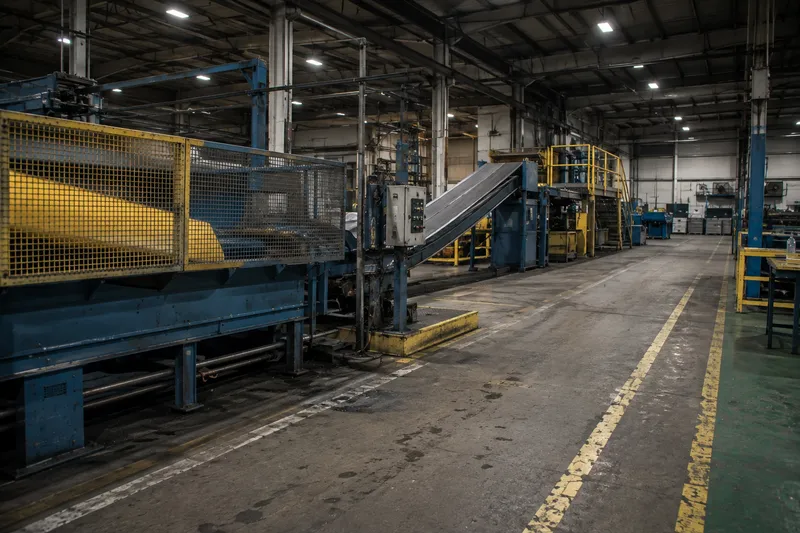
Positions
Six positions that carry a plant
Each has a different job, and the job decides the camera, not the other way round. None of them is aimed at a workstation.
The tool crib and material store
The highest-value single position in most plants, because it is the one place where a discrepancy is countable and therefore investigable. Credential on the door, camera on the door — not on the racking inside it.
Shipping and receiving
Where material changes custody in both directions, and where an error and a theft look identical on paperwork. Coverage that shows what was on the vehicle and who handled it. Backlighting at an open dock door is the design constraint here.
The employee entrance
The threshold a whole shift crosses in a few minutes. Positioned to see faces at walking pace, because people will hold a door for the person behind them and a design that fights that loses.
The contractor and maintenance door
Usually a side or yard door with the least oversight and the most unfamiliar traffic. Credentials that expire with the works, and a camera that shows who used them, close the gap that agency and contract labour otherwise leaves open.
The yard and the perimeter
Scrap bins, skips, finished goods staged outside, gas and chemical storage, and the fence line somebody comes over instead of through. On a plant this is also where anybody arriving out of hours is first visible, which is the only useful moment for live coverage.
Specific process points, with a stated reason
A machine that is repeatedly damaged, a station where high-value components are staged, a point where an incident has already happened. Named positions with a named purpose — never blanket coverage of the production floor.
The line we hold
We will not build you productivity surveillance
This comes up on plant enquiries more than on any other vertical we work in, so it is worth stating flatly.
Cameras go where value and risk move. They do not go on workstations so that somebody can watch people work. We will design coverage of the doors, the crib, the stores, shipping and receiving, the entrances and the perimeter, and we will design a specific process position where there is a specific reason for it. We will not quote blanket coverage of a production floor aimed at operators, and if that is what is being specified we will say so and explain why rather than taking the work and letting you find out later what it costs you.
Cameras never go inside changing facilities, washrooms or break rooms, on any site, for any reason. That is not a per-site judgement and it is not something we will design around if pressed.
Why, beyond the ethics
A system the workforce distrusts stops being reported to
Coverage aimed at people produces resentment, grievances and disputes, and it produces very little evidence, because the events that actually cost a plant money happen at boundaries, not at benches. Nobody tells you a camera is knocked out of alignment if they would rather it stayed that way.
Where your workforce is represented, where and how monitoring is deployed may be a matter for consultation or agreement, and that is not a determination we make for you. What we provide is the design in writing before anything is installed — every position, what each can see, who can view it and how long it is held — so your own counsel and your employee representatives can reach a position, and we will build to whatever they decide.
Coverage aimed at risk, not at people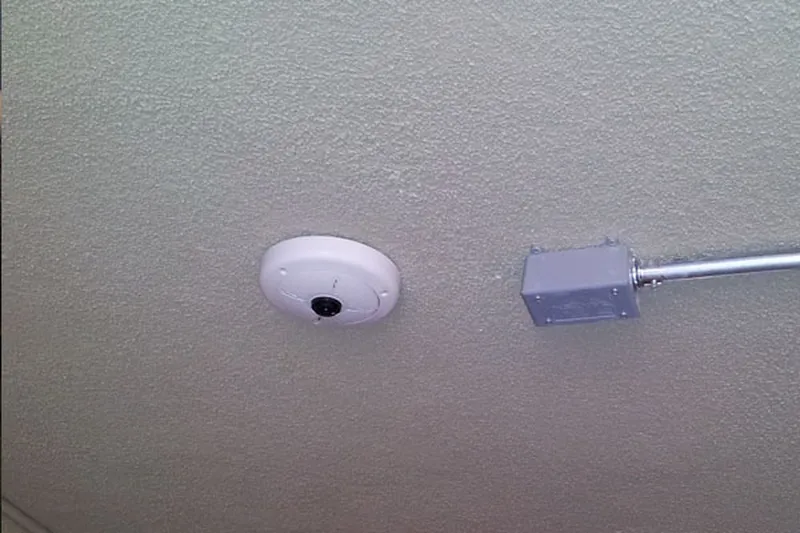
Incident documentation
Footage only helps if it still exists
When something happens on a plant floor — an injury, a near miss, a damaged machine, a dispute about what a contractor did or did not do — the value of a camera system is that it can produce an account of the event. That account cuts both ways, and the fact that it does is precisely why it is worth having: it is as capable of showing the correct procedure was followed as showing it was not.
The same applies to disputes that never become incidents. A supplier insists a pallet arrived complete, a contractor insists a machine was undamaged when they left it, an agency worker disputes an account of what happened at a door. Each of those is settled quickly where an account exists and expensively where it does not, and the cost of not having one is rarely attributed back to the retention setting that caused it.
Whether it exists at all is decided by a handful of things set at install and almost never revisited.
- Retention. Incidents are reviewed weeks and sometimes months after the event. A system configured to hold a fortnight will have overwritten the only record of what happened before anybody asks for it, and no amount of camera quality compensates for footage that no longer exists.
- Accurate system time. The footage has to line up with a shift log, a maintenance record and a written report. A recorder whose clock has drifted produces an account nobody can align with anything else, which is a commissioning detail people skip and regret.
- An export process somebody can actually run. A clip that can only be produced by the one person who knows the software is not evidence available to you. Who can export, in what format, and how that is recorded, are set up at handover.
- Coverage of the right positions. An incident at a machine that is not covered is not documented, however good the rest of the system is. This is the honest argument for a specific process position — a named place with a named reason — as opposed to blanket floor coverage.
- We do not advise on your obligations. What you are required to record, keep or report is a question for your own safety and legal advisers, not for your camera contractor. We do not cite a standard at you, we do not tell you what retention you owe anybody, and we will design to whatever number they give you.
- Say what you need before install. If footage is expected to serve incident review, that changes retention, storage sizing and which positions are specified. It is a design input rather than a happy accident.
Where cheap work fails first
Dust, vibration and washdown decide what survives
Airborne dust and coolant mist settle on a lens and turn a clear picture into a haze over a few months, so positions get specified with cleaning access in mind. Vibration from presses, compressors and overhead cranes walks a mount out of alignment slowly enough that nobody notices until footage is needed and the camera is looking at a wall.
Washdown areas need enclosures rated for what is actually sprayed at them, not for weather. High bays put cameras out of reach of anything but a lift, which is a maintenance cost decided at design time. And the electrical environment of a plant is genuinely hostile to a network — drives, welders and switchgear produce noise that a copper run passing the wrong way through a building will pick up.
Copper or fibre, decided per run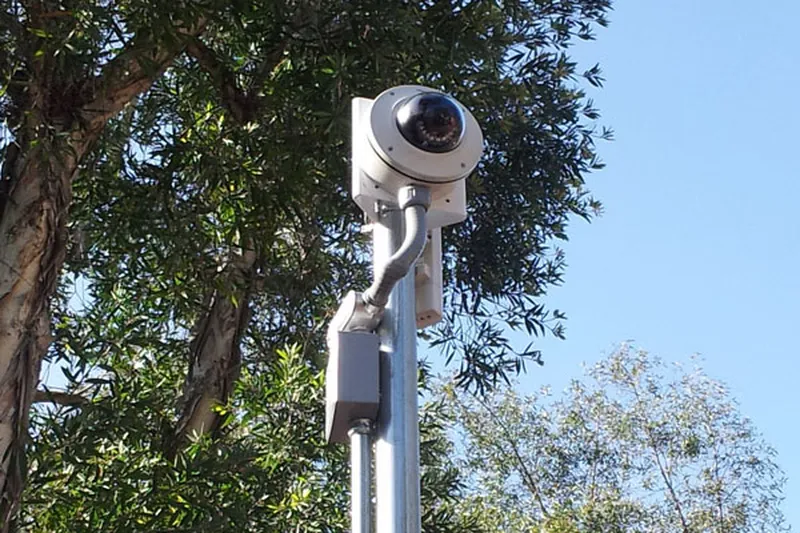
The rest of the system
What a plant usually needs
- Doors, credentials and expiry. The crib, the material store, the maintenance and contractor doors and the interior boundaries, with per-person rights, contractor credentials that expire with the works, and free mechanical egress at every controlled opening. That is commercial access control.
- Camera design and installation. Positions specified against what each has to achieve, in an environment of dust, vibration, washdown and backlit openings — and nothing aimed at a bench. That is commercial security camera installation.
- Intrusion detection on the quiet parts. Stores, maintenance areas and the yard alarmed and verified against the cameras, so an activation is assessed, not simply forwarded. That is commercial alarm monitoring.
- Somebody watching the dark hours. An operator on the site during a shutdown, a holiday period or the small hours, able to see an activation and speak into the space. That is remote video monitoring.
- Controlled entry at the goods and visitor doors. A video intercom so whoever answers can see a driver or a visitor before releasing anything. That is video intercom and door entry.
- The network underneath it. Long runs across a large building, separately grounded structures, electrical noise from plant, and a decision between copper and fibre taken per run, not per site. That is structured cabling.
A running plant cannot stop for a cable pull
Installation is phased against planned maintenance windows, shutdowns and holiday periods, and the programme is agreed at survey.
Permits, lockout requirements, hot-work rules and escort arrangements are yours, and we work to them. Where our schedule depends on one of your windows, that dependency is written down, not assumed — agree the programme at survey.
Where the site is primarily distribution with some assembly instead of the other way round, the dock, trailer yard and cargo argument is treated properly on warehouse and logistics security and is not repeated here. If it is easier to start from the service than the vertical, the full list is on all commercial services, and the other verticals are on all industries.
Common questions
Manufacturing security questions
No, and we will push back if that is what is being asked for. Cameras go where value and risk actually move — the doors, the tool crib, the raw material store, shipping and receiving, the entrances and the perimeter. Pointing them at workstations so somebody can watch people work produces resentment, grievances and almost no evidence, and it makes the whole system something the workforce resents, not something it accepts. There are legitimate reasons to cover a process area — a machine that is repeatedly damaged, a station where high-value components are staged, a point where an incident has already happened — and those are specific positions with a stated reason, not blanket coverage of the floor.
RelatedEmployee safety
By controlling the boundary. Watching the floor is the wrong instinct here. Tooling and raw material generally leave through a small number of predictable points: the crib window, the material store door, the shipping door, the employee entrance and whatever door is nearest the car park and gets propped every shift. Credentials on those doors give you who opened them and when; a camera on the door — not in the room — gives you the person to go with the credential. The crib is the highest-value single position in most plants, because it is the one place where a discrepancy is countable and therefore investigable — and an investigation that starts from a time needs an access log to have anywhere to go.
RelatedEmployee safety
With credentials that expire on their own, which is the thing a key or a signed-in badge has never been able to do. A contractor’s credential is issued for the duration of the works, on the doors the works actually touch, and it stops working when the job ends whether anybody remembers to collect anything or not. Agency and temporary staff work the same way on a shift or contract schedule. It also removes the most awkward conversation in facilities management, which is asking a contractor for keys back at the end of a project that overran, and it gives you a record when something is missing from an area only a handful of people could reach.
RelatedEmployee safety
Frequently, and it cuts both ways — footage is as capable of showing that the correct procedure was followed as showing that it was not, which is exactly why having it is worth more to a plant than not having it. What decides whether it exists is retention: incidents are reviewed weeks and sometimes months after the event, and a system configured to hold a fortnight will have overwritten the only account of what happened before anybody asks for it. Accurate system time matters for the same reason, because the footage has to line up with a shift log and a written report. Both are decisions taken at install. We do not advise on your recordkeeping obligations — that is a question for your own safety and legal advisers, and we will design to whatever retention they tell you to hold.
RelatedEmployee safety
It may, and that determination is yours. Where and how a workforce is monitored can be a matter for consultation or agreement, and the position depends on your agreements and your obligations as an employer — not on anything an installer can rule on. What we do is make the design explicit before anything is installed: every camera position, what each one can see, who will be able to view live and recorded footage, and how long it is held. That document is what your own counsel and your employee representatives need in order to reach a position, and once they have reached one we build to it. It is a much easier conversation before a cable is pulled than after somebody notices a new camera.
RelatedEmployee safety
The employee entrance and whichever door is closest to the car park, which is frequently not the same door and is almost always the one nobody planned for. Shift change is the busiest and least controlled moment in a plant’s day: a large number of people cross one threshold in a few minutes, doors get held for the person behind, and a credential system that requires each person to badge individually will simply be defeated by courtesy. The realistic design accepts that, covers the entrance with a camera positioned to see faces at walking pace, and puts the harder controls on the interior boundaries that only a few people should cross, not on the door everybody uses at once.
RelatedEmployee safety
Usually the parts of the site that are not running, not the parts that are. A plant on continuous shifts still has a quiet yard, a stores building nobody enters overnight, a maintenance area, and a perimeter with far fewer eyes on it at three in the morning than at three in the afternoon. Those are worth alarming and, where the exposure justifies it, worth having watched live — an operator who can see an activation and speak into the space interrupts the incident. On a genuinely dark site over a shutdown or a holiday period, that becomes the main thing the system does.
RelatedEmployee safety
We do it, and the detailed argument for it lives on our warehouse and logistics page, not being repeated here — trailer yards, dock doors, staging and cargo in transit are that page’s subject and it treats them properly. The short version for a plant is that inbound and outbound are the two points where material changes custody, so both want coverage that shows what was on the vehicle and who handled it, and dock doors are difficult positions because of backlighting. If your site is primarily distribution with some assembly instead of the other way round, start there instead.
RelatedEmployee safety
The camera, cabling and intercom work runs under CSLB #976737, our C-7 low voltage contractor’s licence. Monitored CCTV, intrusion alarm and access control run under BSIS ACO #7501, our Alarm Company Operator licence. Neither is a claim you have to take on faith — the issuing agencies will confirm both. Fire comes up often on a plant floor because doors and detection tend to be interlinked: we carry no C-10 and no C-16, so that scope belongs to your own licensed fire alarm contractor. Everything else here is commercial premises only, not residential.
RelatedEmployee safety