Hospitality
Hotel and restaurant security cameras in San Diego
Hospitality invites the public into the building by design, which puts the security problem in the common areas and back of house, not at the perimeter. Corridors, entrances, the till and the delivery door. Never a guest room.
Hospitality
The front is open by design, and the back door is the one nobody watches
Hospitality is unusual among commercial verticals in that the front of the building is not defended at all, deliberately. Anybody can walk into a lobby, sit in a bar or take a table, and the business depends on that being easy. Which means the security problem is not at the perimeter. It is in the common areas and the back of house, and those are the parts that get the least attention.
That is also where the actual losses sit. Cash and card handling happens at a till, moves to a safe, and then to a deposit — usually at the end of a long shift, usually with one person doing it. Deliveries and staff come and go through a service door that is propped open for convenience most of the day. Neither is dramatic and both are routine, which is exactly why they persist.
Liability in hospitality has a particular shape as well: it arrives late. A slip, a dispute at a bar, an allegation about a member of staff, a claim about property missing from a room — these surface weeks after the event, which makes the retention decision more consequential here than in most verticals. Footage that has already rolled over is not evidence.
Common areas only, and we mean that literally. There are parts of a hospitality property that are never covered, and we will set out where that line falls before anything is quoted rather than after.
That is with us. We will come back to arrange a survey. If it is urgent, call (858) 222-7547.
- CSLB C-7 #976737
- BSIS ACO #7501
- CMMC certified
- SAM.gov registered
- Est. 2008
The problem
A building that invites the public in, and a back door nobody watches
Hospitality is unusual among commercial verticals in that the front of the building is not defended at all, deliberately. Anybody can walk into a lobby, sit in a bar or take a table, and the whole proposition depends on that being comfortable. So the security design cannot be about keeping people out. It has to be about knowing what happened, and about controlling the parts of the building the public is not in.
Those parts are where the actual losses are. Cash and card handling sits at a till and moves to a safe and then to a deposit, usually at the end of a long shift, usually with one person doing it. The stores, the walk-in, the spirits, the linen and the office are behind a back corridor that runs from a delivery door propped open through every service. Agency staff, suppliers and contractors use that route routinely, and most of them have never been introduced to anybody at the front desk.
What follows is written around those three: the common areas and what they can honestly produce, the money and the boundary behind it, and the retention decision that determines whether any of it is still there when somebody finally asks.
The third problem
The camera existed. The evidence did not.
Liability in hospitality has a specific shape: it arrives late. A slip, a dispute at a bar, an allegation about a member of staff, a claim about property missing from a room — these surface weeks or months after the event, by which time a recorder configured to hold a fortnight has overwritten the only account of it.
- The claim arrives after the footage has rolled off
- Retention is a decision, not a default the installer picked
- A fortnight is short for a vertical whose disputes arrive late
Positions
Six positions that carry a hospitality property
Each has a different job, and the job decides the camera, not the other way round. None of them is inside a guest room.
The main entrance
The one point everybody crosses, in a predictable direction, at walking pace. That makes it the most realistic position on the property to get footage good enough to identify somebody, and it is worth specifying properly even where the rest of the coverage is looser.
The front desk or the counter
Where a difficult guest becomes a staff safety problem, where a transaction is disputed, and where the only account of an incident is otherwise two people disagreeing. Framed on the counter and the approach to it, not on the seating behind.
Corridors and lift lobbies
The circulation, never the rooms. Who approached a door and at what time is exactly the account an incident review needs, and it is obtainable without a camera ever pointing into a guest room.
The till and the bar service point
Framed to show the transaction and the person, not a general view of the bar. This is the position that pairs with exception review, and the one most often mounted too high and too wide to show anything but that somebody stood there.
The delivery door and back corridor
The clearest path from the stores to the street, propped through every service, and the least supervised part of the building. Needs a view from both sides and an alert when it is held open longer than a delivery takes.
The office, safe and cash room
Where the takings, the keys and the paperwork sit, and where somebody is alone at the end of a shift. Credential rather than key on the door, camera on the door, and a duress button more often than another camera.
The privacy line
Common areas only, and we mean it literally
It is worth putting this in plain words, not leaving it to be inferred, because it is the question a hospitality buyer most needs answered before they can trust anything else on this page.
Cameras cover common areas and back of house. They do not go inside guest rooms, restrooms, changing areas or staff locker rooms. That is not a per-site judgement, not a setting somebody can enable later, and not something we will design around under pressure. If a system is specified to us that crosses the line, we will say no and explain why. We do not quietly omit a camera and let you believe it is there.
The interior view adds nothing but risk
The practical case runs alongside the ethical one. A corridor position produces the account an incident review actually needs — who approached a door, at what time, carrying what, and when they left — and it produces it without the property holding footage of guests inside rooms, which is an exposure no operational benefit would justify.
The interior view adds nothing to the corridor view except risk.
The same side of that line
Audio is the request we refuse most often
Audio sits on the same side of the line and is the request we refuse most often in this vertical. California is an all-party consent state, and a lobby, a bar and a dining room are full of conversations nobody expects to be recorded.
Whether a particular space on your property falls inside or outside the rules depends on the facts of that space, and it is not a determination we make for you. This is not legal advice. We design camera systems without audio capture by default; if you want audio anywhere, take it to your counsel first and we will design to whatever they tell you.
Ask what we will and will not install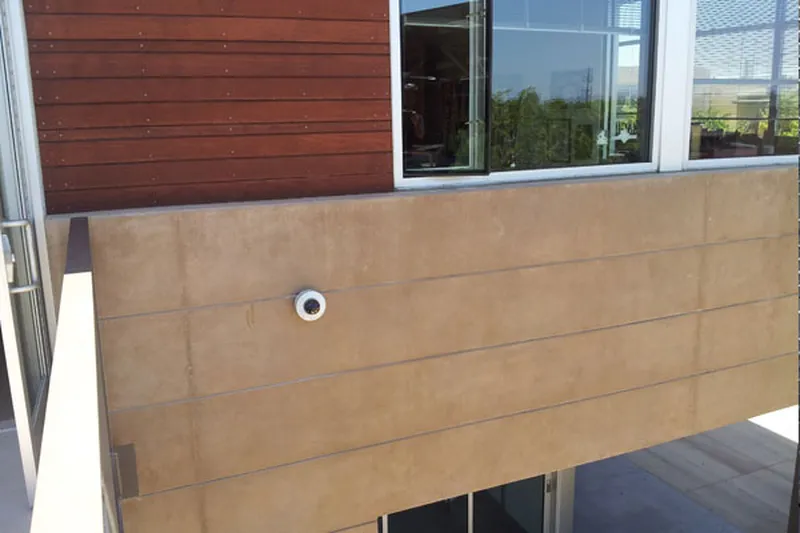
Money and back of house
The till, the safe and the door nobody watches
Money leaves a hospitality business quietly and continuously, not dramatically. Voids, no-sales, comps, refunds and discounts applied for somebody’s benefit; drinks poured and not rung; a till count that is short by an amount too small to investigate individually and large enough to matter over a year. None of that is visible in general coverage of a room, and all of it is visible at a counter.
The useful arrangement is a camera framed on the transaction and the person, plus review by exception. The concept is transaction data shown alongside or overlaid on the video, so a manager searching for voids and refunds sees what physically happened at the counter at that moment. Whether it is achievable at your venue depends entirely on what your point-of-sale system exposes and how— we check that at survey and tell you plainly, not promising an integration before seeing what you run or naming a product as supported on the strength of a datasheet. Where it is not available, exception review still works with a well-framed till camera and an accurate system clock: the report gives the timestamp, the footage gives the event.
Back of house
A handful of doors carries most of the recoverable value
The delivery door, the stores, the walk-in, the spirits store, the office and the cash room are a small set of doors carrying most of the property’s recoverable value, and they are typically on keys that circulate freely among staff, agency workers and contractors.
Credentials fix the circulation problem — rights granted per person and withdrawn the day somebody leaves — and produce the log that makes a shortage investigable.
Credentials on the doors that carry it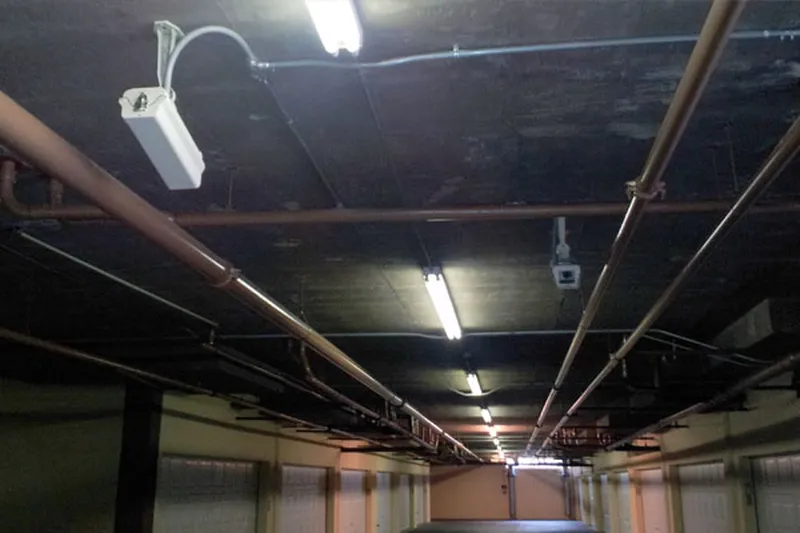
Claims and disputes
Footage cuts both ways, which is the argument for having it
Operators are sometimes wary of coverage on the basis that it might capture something inconvenient. In practice the arithmetic runs the other way: the events that generate claims against a hospitality business are overwhelmingly ones where an independent account helps the operator, and the absence of an account is what turns a weak claim into a settled one. Video is as capable of clearing your property as implicating it, and the properties that regret their systems are almost always the ones whose footage had already gone.
- Retention is the whole ballgame. Claims arrive weeks and sometimes months late. A recorder holding a fortnight will have overwritten the event before anybody asks. What number you should hold is a conversation for you, your insurer and your counsel — we do not tell you what you owe anybody, and we build to whatever they decide.
- Accurate system time. The footage has to line up with a shift record, a till report and an incident log. A drifted clock produces an account nobody can align with anything, which is a commissioning detail people skip and regret.
- An export process somebody can run. A clip only the one person who knows the software can produce is not evidence available to you. Who can export, in what format, and how that is recorded, are settled at handover.
- Coverage of circulation, not of rooms. Entrances, lobbies, corridors and lift lobbies are where the disputed movement happens. That is also, conveniently, exactly where a camera is appropriate.
- A short viewing list. Blanket access for every duty manager tends to end with footage of guests and staff circulating. A general manager and one deputy, with a defined export process and a record of who exported what, is the arrangement that holds.
- Say it before install. If footage is expected to serve claims defence, that changes retention, storage sizing and which positions get specified. It is a design input.
Egress stays free whether the system works or not
Egress from any controlled door we install is free and mechanical whether the system has power, a network or a working controller.
Where a corridor or stair door is interlinked with fire detection, which is common in hospitality buildings, that part is coordinated with your own licensed fire alarm contractor: we do not hold a C-10 or C-16 and do not work on fire alarm systems. Guest-room locking is likewise a separate trade, and we work alongside whoever holds that system without claiming it as our scope — see the licences we hold, and the ones we do not.
The licences we hold, and the ones we do not
What a hospitality property usually needs
- Camera design and installation. Entrances, front desk, corridors, lift lobbies, till positions, the delivery door and the office — each specified against what it has to achieve in the light it actually has, and nothing pointed into a room. That is commercial security camera installation.
- Back-of-house doors on credentials. Stores, walk-in, spirits, office, cash room, plant and roof access, with per-person rights withdrawn the day somebody leaves and free mechanical egress throughout. That is commercial access control.
- Intrusion detection and duress. Monitored intrusion verified against the cameras, plus a fixed duress button where somebody closes up alone or counts a till at the end of a shift. That is commercial alarm monitoring.
- Somebody watching after close. An operator on the property during closed hours, able to see an activation and speak into the space, which interrupts the incident. That is remote video monitoring.
- The staff and delivery entrance. A video intercom so whoever answers can see a driver or a late arrival before releasing the door. That is video intercom and door entry.
- Keeping it working in a hospitality environment. Kitchen grease, humidity, sun into a lobby lens, cameras knocked during a refit, and drives failing quietly while retention drifts below what a claim needs. That is CCTV maintenance and repair.
For groups running several properties, the same work produces one standard across the estate — one platform, consistent camera naming, the same retention everywhere and per-property permissions — so a request about any site is answered the same way, whoever fitted that building. The cabling underneath is structured cabling, and in an occupied hotel it is scheduled around the property, not the other way round: floors taken out of service in sequence, corridors worked overnight, and landlord or brand standards on routes and finishes confirmed before anything is booked.
If it is easier to start from the service than the vertical, the full list is on all commercial services, and the other verticals are on all industries.
Common questions
Hospitality security questions
No, and we will decline the request if it is made. Cameras cover the corridors, the lift lobbies, the entrances, the public areas and back of house. The inside of a guest room is not a place a camera goes, ever, on any property, for any reason — and neither is a restroom, a changing area or a staff locker room. That boundary is not a configuration option or something to be settled per site. If a system is specified to us that crosses it we will say no and explain why. We do not quietly leave the camera out and let you assume it is there. The corridor view is also the useful one: who approached a door and at what time is the account an incident review actually needs.
California is an all-party consent state, and hospitality is the worst possible environment for that: a lobby, a bar and a dining room are full of conversations that people plainly do not expect anybody to be recording. Whether a specific space in your property falls inside or outside the rules depends on the facts of that space, and it is not a determination we make for you. This is not legal advice. Our default is to design camera systems without audio capture. If you want audio anywhere on the property, take it to your own counsel first, get their position in writing, and we will design to whatever they tell you.
Footage that still exists, is time-accurate and covers the place the claim is about. It cuts both ways, and that is the point — video is as capable of clearing your property as implicating it, which is why coverage of entrances, lobbies, corridors and circulation areas is worth having. What defeats operators is almost never camera quality. It is that a claim arrived weeks after the event and the recorder had already overwritten the only account of it, or that the system clock had drifted so the footage could not be lined up with a shift record. Both are decisions taken at install. What retention you should hold is a conversation for you, your insurer and your counsel; we will build to the number they give you.
At the point of sale and at the transitions around it, not out on the floor. Voids, no-sales, comps, refunds and discounts applied for somebody’s benefit, drinks poured and not rung, and cash moving between a till, a safe and a deposit are where a venue loses money quietly and continuously. What helps is coverage framed on the transaction and the person at the counter — not a general view of the bar area — combined with review by exception. Whether transaction data can be shown alongside the video depends entirely on what your point-of-sale system exposes, and we check that at survey, not promising an integration before seeing what you run.
Usually far more than the front, because the front is watched by everybody and the back is watched by nobody. The delivery door is propped through every service, the corridor from it reaches the stores, the office and often the guest areas, and the people who use that route include suppliers, agency staff and contractors nobody at the desk has met. The fix is not more cameras on the floor; it is a credential, not a key, on the stores, the office and the cash room, a camera on those doors, and an alert when the delivery door has been held open longer than a delivery takes.
Whoever you decide, and it should be a short list settled before handover. In hospitality the practical arrangement is usually a general manager and one deputy with viewing rights, a defined process for exporting a clip when an incident or a claim requires it, and a record of who exported what. Blanket access for every duty manager tends to end badly — footage of guests and staff circulates, and the operator finds out about it when somebody complains. We set the accounts up at commissioning and write down who holds what, which also means access can be removed the day somebody leaves.
No, it is a smaller version of the same design. A restaurant has an entrance, a counter or till, a bar, a back corridor, a stores and walk-in area, an office with a safe, and a delivery door — which is six positions, not sixty, and they are the same six transitions that matter in a large property. The parts that scale away are the multi-floor corridors and the lift lobbies. What does not scale away is the after-hours question, because a venue with a safe, spirits and equipment sitting empty overnight in a busy district is exposed regardless of how many covers it does.
No. Guest-room locking is its own trade with its own product ecosystem, and it is normally supplied and serviced by the lock manufacturer or their appointed integrator, not by a low voltage contractor. What we do is the access control on the doors that are not guest rooms — back of house, stores, the office, the cash room, plant and roof access, and staff entrances — plus the cameras and the monitoring. Where a property needs both, we work alongside whoever holds your guest-room system, not claiming a scope we do not have.
It does not include the fire alarm, and that is the half worth answering first. Fire alarm work needs a C-10 or a C-16. We hold neither, so on a hotel it stays with your fire contractor — which matters more here than on most buildings, because a hotel's fire system is tied into its life-safety and evacuation arrangements and is not something to have two contractors touching. Everything else is ours: CSLB #976737 for cameras, cabling and door hardware, BSIS ACO #7501 for intrusion alarm and monitoring.