Self-storage
Self-storage security cameras and gate access in San Diego
Self-storage is the one commercial vertical that hands strangers a credential to an empty site and asks them to let themselves in. The system has to know who came through the gate, and somebody has to be watching when nobody is there.
Self-Storage
You have handed strangers a credential and gone home
Every other commercial building we work in is controlled by the people who own it. Self-storage inverts that. The business model is to issue a credential to a stranger and let them come and go on an empty site, largely unsupervised, which makes the exposure quite different from a break-in problem. The site is less under threat from somebody defeating a perimeter than from legitimate access being used for something other than what it was granted for.
That points the whole design at one question: does the system know who came through the gate, or only that a code was entered. A code is not a person. It is shared, written down, kept after a unit is given up, and used by somebody the tenant never mentioned. A plate is better and is still not a promise — it identifies a vehicle, under conditions that have to be right for it to be read at all.
The second half of the problem is that when something does happen there is nobody on the ground. A recorder is a superb archive and a poor intervention. It will document a visit in detail and stop nothing, which is why sites that care about the outcome rather than the record end up wanting somebody watching during the hours nobody is on site.
We do the access control at the gate. We do not install or maintain gate operators, and it is worth knowing which trade owns which fault before a project starts.
That is with us. We will come back to arrange a survey. If it is urgent, call (858) 222-7547.
- CSLB C-7 #976737
- BSIS ACO #7501
- CMMC certified
- SAM.gov registered
- Est. 2008
The problem
You have handed out the keys and gone home
Every other commercial building we work in is controlled by the people who own it. Self-storage inverts that. The business model is to issue a credential to a stranger, let them come and go without supervision, and be somewhere else while they do it — at many sites for most of the week, and at unstaffed sites permanently.
The second half of the problem is that when something does happen, there is nobody on the ground. A recorder is a superb archive and a poor intervention: it will document a visit in detail and do nothing about it while it is under way. On a staffed site that trade-off is acceptable because a person is present. On an unstaffed one it means every incident runs to completion and is reviewed afterwards, which is why remote video monitoring matters more in this vertical than in almost any other.
Everything below follows from those two facts: make the credential identify a person, not a code, and put somebody on the site during the hours nobody is on the site.
The unusual shape of it
Whether they are the tenant, a keypad has never been able to answer
The site is not under threat from outsiders breaking a perimeter so much as it is exposed to legitimate access being used for something other than what it was granted for. Somebody with a valid gate code is, from the system’s point of view, a tenant.
Whether they are the tenant is a question a keypad has never been able to answer.
The hours nobody is on the ground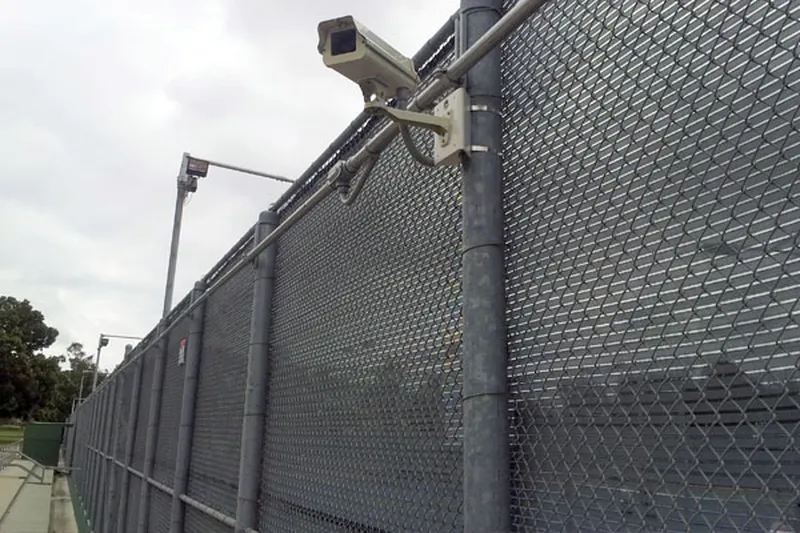
Positions
Six positions that carry a storage site
Ranked roughly by how much each contributes. None of them is inside a tenant’s unit — that is not something we cover, on any site.
The gate, both directions
Everything that arrives passes it, in a controlled direction, at low speed, and stops. That combination does not occur anywhere else on the property, which makes it the single most productive position on the site — and the right place to attempt plate capture if plate capture is wanted at all.
Drive aisles, along their length
Framed down the aisle, not across it, so a camera sees vehicles and people the length of the run. Catching them crossing a narrow field. Aisles are also where a vehicle sits with its doors open for twenty minutes, which is the behaviour worth having on record.
Interior corridor entrances
The point where a person separates from their vehicle and walks in carrying something. This is the closest a storage site gets to a retail entrance: predictable direction, walking pace, and a realistic chance of footage good enough to identify somebody.
The corridors themselves
Long, usually poorly lit, and where all unit-door activity happens. Coverage here is about the corridor, never about a unit interior. Low light is the design constraint, and it is the position most often specified with a camera that cannot handle it.
The office, counter and key store
Where cash, cards, contracts, overlock keys and the access system itself all live, and the one part of the property with a staff member working alone. Worth a duress button as often as it is worth another camera.
The perimeter approach
The fence line, the back boundary and whatever adjoins the site, for the arrival that does not use the gate at all. Coverage that begins at the building begins too late to be useful to anybody watching live.
The gate
We do the access control. We do not do the gate operator.
This distinction gets blurred constantly in this vertical, so we will state it before anything else. We install and integrate the access control at your gate. We do not install, supply, service or repair the gate operator.
What we do: the reader or keypad and its mounting, the credentials and who holds them, the controller and its cabinet, the interface into whatever control input your existing operator already provides, the camera position covering the entry point, and the record of who was granted entry and when. That is a low voltage and alarm-company scope and it is the scope our licences cover.
The other side of that line
Vehicle gates injure people when the standards are not met
What we do not do: the motor, the slide or swing mechanism, the safety edge, the photo-eyes, the loop detection buried under the drive, and the mechanical commissioning of any of it. That is a separate trade with its own licensing and its own safety standards. If your gate is failing mechanically, the answer is your gate contractor, and we will tell you so, not quoting around it.
The same boundary applies to fire: we do not hold a C-10 or C-16, so we do not work on fire alarm systems. Pedestrian egress from any controlled door we install is free and mechanical regardless of whether the system has power, a network or a working controller.
The access-control half, in full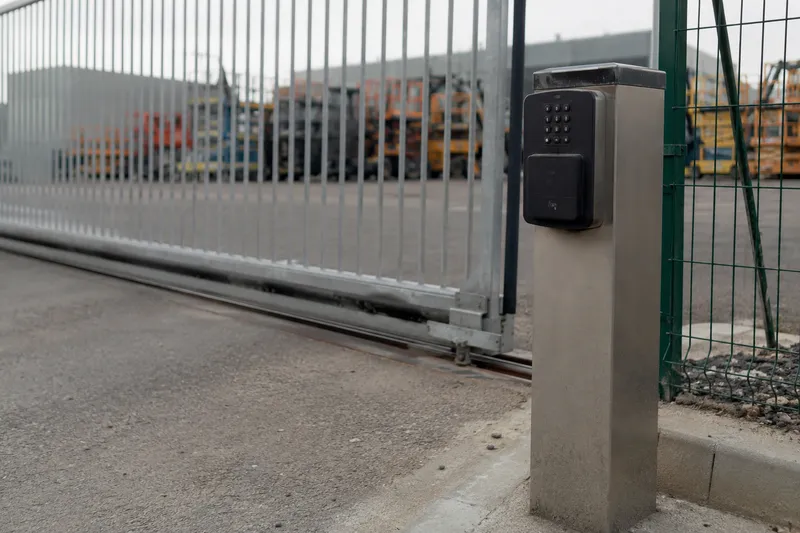
Credentials and plates
A code is not a person, and a plate is not a promise
A gate keypad records that a valid code was entered. It does not record who entered it, and codes are the most freely shared credential there is — passed to a partner, a helper with a van, a buyer at a lien auction, or simply never removed when a tenant left. When something goes wrong, a code in a log narrows the field to everybody who has ever known that code, which at most sites is a considerably larger group than the tenant.
On plate capture, bluntly
A designed position, not a product feature
Whether plate capture works at your site depends on the angle to the vehicle, the lens, the lighting at that exact spot and how fast vehicles move through the gate. A camera that produces readable plates at a gate may return nothing usable pointed down a drive aisle. So it gets its own mounting, its own lens and its own lighting, aimed where vehicles are slowest and most square-on.
We do not quote a read rate, an accuracy percentage or a capture distance, because those are properties of your site, not of a datasheet, and any number we gave you before surveying would be a guess dressed as a specification. That is how a plate position is designed.
What actually fixes it
A person to put beside the credential
Two things fix that, and they work together. The first is per-tenant credentials on a schedule, so access is granted and withdrawn per person, not per code — a delinquent account suspended from the office, an ex-tenant removed the day they leave, and genuine 24-hour access sold as a product to the tenants who pay for it while everybody else is on gate hours.
The second is a camera position framed on the vehicle and the driver at the point of entry, so there is a person to put beside the credential.
Credentials at the vehicle gate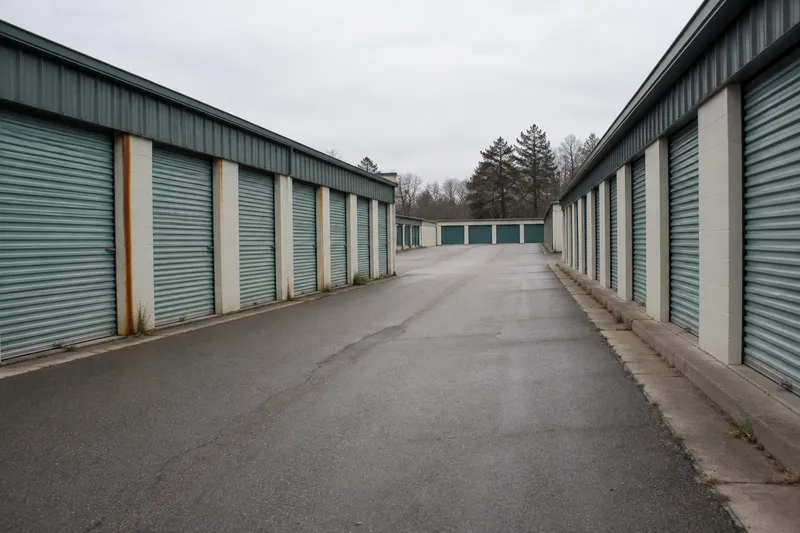
The unstaffed hours
Somebody watching beats something recording
Self-storage is the clearest case in our whole portfolio for remote video monitoring, and the reason is structural, not promotional. The site is designed to operate without staff. Recording, by definition, produces an account after the fact. On a site with nobody present, that means every incident runs to its conclusion and is discovered later.
- An operator can interrupt; a recorder cannot. Live coverage during unstaffed hours means somebody sees an activation, assesses it, and can speak into the space. A great many incidents end at the moment a person realises they are being watched by a person.
- It removes the false-activation problem from your phone. An operator looking at video can tell a vehicle from a cat before anybody is called, which is the difference between a site that gets responded to and one whose alerts everybody has learned to ignore.
- It scales across sites better than staff do. An operator watching a group of properties during the same hours is a different economic proposition from a person at each gate, which is why multi-site operators tend to arrive at this arrangement on their own.
- It pairs with the access system. The useful alerts are correlations: a unit door opening with no gate entry behind it, a credential used at an hour it should not be, a gate held open longer than a vehicle takes.
- Verified intrusion, not bare activations. Where a building is alarmed, the activation is checked against the cameras before anybody is dispatched, so what leaves the site is an assessment.
- Guarding is a separate conversation. Where a property genuinely needs a physical presence, that is coordinated through Guardian Integrated Security, Inc., of which we are a DBA, under its private patrol operator licence. We do not present ourselves as a guard company or quote guard hours.
Nothing we install claims to know what is stored there
What door monitoring reports is that a particular door opened at a particular time, and whether that matched a gate entry by that unit’s tenant. An opening with no matching credential is the exception worth an alert.
What it does not report is anything about what is inside. We never see into a tenant’s unit, no camera points into one, and nothing we install claims to know what is stored there.
Detection that raises an exception, not a wall of alerts
What a storage site usually needs
- Somebody on the site when nobody is on the site. Live operator coverage during unstaffed hours, with the ability to speak into the space, which is the part of a storage system that does something. That is remote video monitoring.
- Gate and door credentials. Per-tenant rights on a schedule, suspension from the office, same-day removal when a tenant leaves, and the interface into your existing gate operator’s control input. That is commercial access control.
- Camera design and installation. The gate, the aisles along their length, the corridor entrances, the corridors and the perimeter approach — each specified against what it has to achieve in the light it actually has. That is commercial security camera installation.
- Verified intrusion detection. Monitored intrusion on the buildings and the office, checked against the cameras so an activation is assessed, not simply forwarded. That is commercial alarm monitoring.
- The gate call point. An intercom at the gate or the office door so somebody arriving out of hours can be seen and spoken to before anything is released. That is video intercom and door entry.
- Keeping it working outdoors. A storage site is a largely exterior installation: sun, dust, irrigation, vehicle strikes on low mounts, and drives that fail quietly. That is CCTV maintenance and repair.
The cabling underneath is its own problem on a storage property, because the runs are long, they cross open ground between separate buildings, and those buildings are frequently on separately grounded structures — which is a fibre question, decided per run. That is structured cabling. Where a site is being built or expanded, that is worth settling on the drawings.
If it is easier to start from the service than the vertical, the full list is on all commercial services, and the other verticals are on all industries.
Common questions
Self-storage security questions
No. We install and integrate the access control at the gate — the reader or keypad, the credentials, the controller, the record of who was granted entry, and the interface into whatever control input your existing operator provides. The operator itself is a different trade: the motor, the slide or swing mechanism, the safety edge, the photo-eyes and the loop detection under the drive are somebody else’s licensed scope, with their own safety standards, and we do not install them, service them or repair them. If your gate is failing mechanically, the fix is your gate contractor, and we will tell you that before quoting around it. Where both trades are needed we coordinate with yours so the access side and the mechanical side are commissioned together.
RelatedGate access control systems
Because it logs a code, not a person. A keypad tells you that a valid code was entered at a time, and codes are the most freely shared credential in existence — passed to a partner, a helper with a van, a buyer at an auction, an ex-tenant who never had it removed. When something goes wrong, a code in a log narrows the field to whoever has ever known that code, which at most sites is a much larger group than the tenant. Pairing the gate with a camera position framed on the vehicle and the driver at the point of entry gives you a person to put beside the credential, which is the difference between a log and evidence.
RelatedGate access control systems
It can where it is designed as its own position, and we will not sell it as a feature of the general camera package. Plate legibility is decided by the angle to the vehicle, the lens, the lighting at that exact spot and how fast a vehicle is moving through the gate — a camera that produces readable plates at a controlled gate may return nothing usable pointed down a drive aisle. So it is designed as a dedicated position with its own mounting, its own lens and its own lighting, aimed at the point where vehicles are slowest and most square-on, which at a storage site is usually the gate itself. We tell you at survey which positions can realistically achieve it and which cannot, and we do not quote a read rate, an accuracy figure or a capture distance, because those depend on your site, not on a datasheet.
RelatedGate access control systems
One thing, and it is worth being precise about it: that a specific unit door was opened at a specific time, and whether that opening matched a gate entry by the tenant of that unit. That correlation is the whole value. An open door with no matching gate credential is the exception worth an alert, and an open door on a unit whose tenant is three months overdue is worth a different one. What it does not tell you is anything about what is inside the unit, what was removed, or whether the contents changed — we never see inside a tenant’s unit, no camera points into one, and no system we install claims to know what is stored there.
RelatedGate access control systems
It changes it entirely, and it is the reason self-storage is designed differently from almost any other commercial site. A recorder on an unstaffed site is an evidence archive: it documents the visit thoroughly and does absolutely nothing about it while it is happening. If the requirement is that something interrupts an incident, not describing it afterwards, that is monitored live coverage during unstaffed hours — an operator who can see an activation and speak into the space, which ends a large proportion of incidents at the moment somebody realises a person is watching, not a camera. On a site with no staff, that is usually the highest-value part of the system — not an upgrade to consider later.
RelatedGate access control systems
By separating what a credential opens from when it opens it. Access is granted per tenant, per gate and per building, on a schedule, so 24-hour access can be a genuine product for the tenants who pay for it while everybody else is on gate hours — and a delinquent account can be suspended from the office without anybody driving out to change a code. It also means an ex-tenant is removed on the day they leave, not at the next code rotation, which is the failure mode that catches most sites out. The gate stays open as a business proposition; what changes is that the site knows exactly whose credential opened it.
RelatedGate access control systems
The gate is first and by some distance, because everything that arrives passes it in a controlled direction at low speed. After that: the drive aisles, framed along their length; the entrances to interior corridors, which is where a person separates from their vehicle; the corridors themselves, which are long, poorly lit and where most unit-door work happens; the office and any counter holding cash or keys; and the perimeter approach where somebody would come over a fence. What is not worth covering is the interior of a unit, which we do not do at all, and blanket coverage of open yard where a camera returns a distant figure and no identification.
RelatedGate access control systems
Sometimes, and it is a survey question, and not one that can be answered from a photograph. What decides it is what the existing cameras are, whether they can be brought onto a current platform, whether the cabling under them is serviceable or was run to no standard at all, and whether the recorder is something you can still get support and parts for. Storage sites change hands and accumulate equipment across owners, so it is common to find three generations on one property. We survey what is there, tell you plainly what is worth keeping and what is not, and where something has to be replaced we explain why. We do not condemn the lot on principle.
RelatedGate access control systems
CSLB #976737 is our C-7 low voltage contractor’s licence, covering the camera, cabling and intercom installation. BSIS ACO #7501 is our Alarm Company Operator licence, covering monitored CCTV, intrusion alarm and access control. Both numbers are checkable directly with the state, and we'd encourage it. Two things fall outside them at a storage facility: fire alarm, since we carry no C-10 or C-16 and that work stays with your own licensed fire alarm contractor, and the gate operator itself, a separate trade coordinated with your gate contractor. We work commercial premises only, not residential.
RelatedGate access control systems