Education
Campus access control and security cameras in San Diego
A campus has more doors than anybody has keys for, more visitors than reception can see, and stands empty most of the week. Those are the three problems worth designing around, and none of them needs to be sold with a scare story.
Education
More doors than anybody has keys for, and empty most of the week
A school, college or training centre is an unusual commercial building. It is deliberately open to a large population who are meant to move around it freely, it has far more exterior doors than a comparable office, and it stands empty for most of the hours in a week. Those three facts produce the entire security problem and none of them can be designed away.
They also produce two different problems that people routinely try to solve with one system. During attendance hours the problem is routing and accountability: getting visitors to reception rather than past it, and knowing who is in the building. Outside them the problem is an empty site with a lot of ground-floor glass. A system built only for one of those is half a system.
Reception has to be on the path rather than beside it, which is an architectural observation more than a technical one, and it is frequently the cheapest single improvement available. A visitor who can walk past the desk without meaning to will do so, and no amount of camera coverage recovers that.
We should also be direct about how we sell this. We do not sell school security on fear, we do not use worst-case scenarios as marketing, and we will not put a number on what any system prevents. What we will do is tell you what the hardware does and, just as importantly, what it does not.
That is with us. We will come back to arrange a survey. If it is urgent, call (858) 222-7547.
- CSLB C-7 #976737
- BSIS ACO #7501
- CMMC certified
- SAM.gov registered
- Est. 2008
The problem
Too many doors, and the campus is empty most of the week
A school, college or training centre is an unusual commercial building. It is deliberately open to a large population who are meant to move around it freely, it has far more exterior doors than a building of its size normally would, and it is occupied for a fraction of the hours it exists — in session on weekdays during school hours, and dark through evenings, weekends and school breaks.
That produces two entirely different security problems that people routinely try to solve with one system. During attendance hours the problem is routing and accountability: getting visitors past a desk, knowing which staff opened which building, and keeping the twelve doors that are not the front door actually shut. Outside those hours the problem is an empty site with a long perimeter, roof plant, copper, equipment in every room and nobody within earshot.
We are also going to be direct about how this page is written. We do not sell school security on fear, we do not use worst-case scenarios as marketing, and we do not put a number on anything we cannot source. What follows is about doors, visitors, empty buildings and the things that actually go wrong on a campus in a normal year.
What incremental funding produces
The first deliverable is a door schedule
Almost every campus we survey has accumulated its systems building by building, as budgets and grants allowed. That leaves three sets of credentials, two pieces of software, one building still on keys, no shared record of who has access to what, and no single place to remove somebody when they leave.
It is not negligence — it is what incremental funding produces — but it means the first useful thing anybody can hand you is a schedule of the doors you actually have.
One credential list across the estate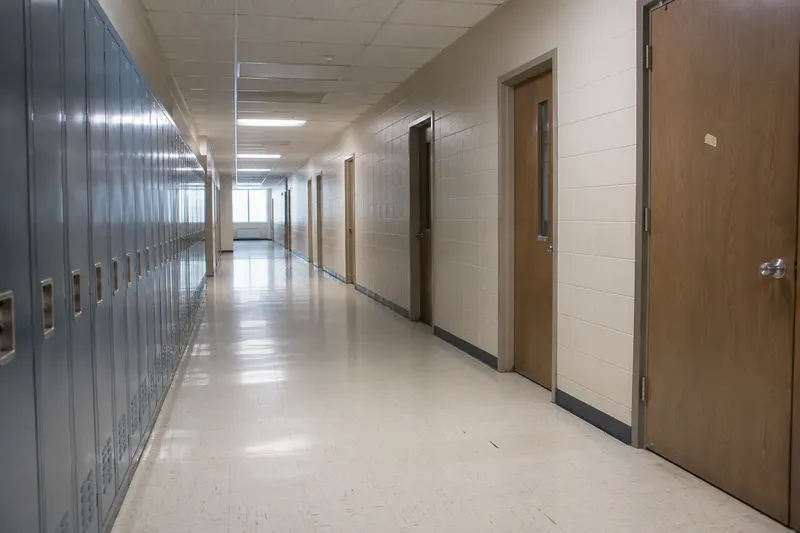
Positions
Six things a campus system has to get right
These are the positions that decide whether the system is used or worked around. None of them is inside a classroom.
One visitor entrance that works
A single exterior door that opens on request during the day, with a video intercom so the office can see and speak to somebody before releasing it. Everything else on credential only. The arrangement fails the moment a second door is easier.
Exterior doors on credential
Every other way in, on a person-and-schedule basis. Rights are granted for the term or the contract and withdrawn the day somebody leaves, which is the thing a key has never been able to do.
Door-held-open alerts
Doors get propped because somebody has a real problem to solve. Preventing that fails; making it visible works. The office learns a specific door has been open longer than a delivery takes, and somebody walking past closes it.
Corridors, stairwells and entrances
The circulation, not the rooms. Coverage on the routes and the boundaries produces an account of who moved where and when, which is what an incident review actually needs, without a camera pointing into teaching space.
Car parks and the perimeter
Where vehicle break-ins happen, where staff leaving a late class are most exposed, and the approach anybody uses out of hours. Lighting and camera position are designed together; a camera aimed into a security light returns a silhouette.
Rooms holding equipment worth taking
IT stores, laboratories, workshops, music and sports equipment, the server cupboard, and wherever the laptop trolleys live. Credentialled doors with a camera on the corridor outside, not inside the room.
What lockdown actually involves
What the hardware does, and what it does not
Lockdown capability is asked about on nearly every campus enquiry, and it is worth describing mechanically, not emotively, because the mechanical description is what tells you whether it is any use to you.
What it is. A command, issued from a trigger point you define — a button in the office, a credential action, a software command — that tells the access controller to stop accepting credentials on the doors it is wired to, securing those doors from the outside without anybody having to walk to them. That is the mechanism in full.
What it depends on. Whether each door’s existing hardware can be secured electrically at all, which on an older campus is frequently the binding constraint. Whether the door is on the system — a door outside the controller’s reach does nothing. Whether the trigger points are somewhere staff can actually reach under pressure. And whether your own written plan says who is authorised to call it and on what basis, because the equipment will do exactly what somebody tells it to and nothing else.
What lockdown does not do
We will not promise what the hardware will achieve
It does not affect egress, ever: people inside push the bar and the door opens whether the system has power, a network, a working controller or none of those. That is a life-safety requirement, not a design preference, and it is not negotiable on any site. It does not replace a plan, drills, or the judgement of the people on site.
And it is not a safety outcome. We will describe what the hardware does and decline to promise what it will achieve, because nobody honest can promise that and a vendor who does is telling you something about themselves. Where doors are interlinked with fire detection — common on campuses — that part is coordinated with your own licensed fire alarm contractor: we hold no C-10 or C-16.
The licences we hold, and the ones we do not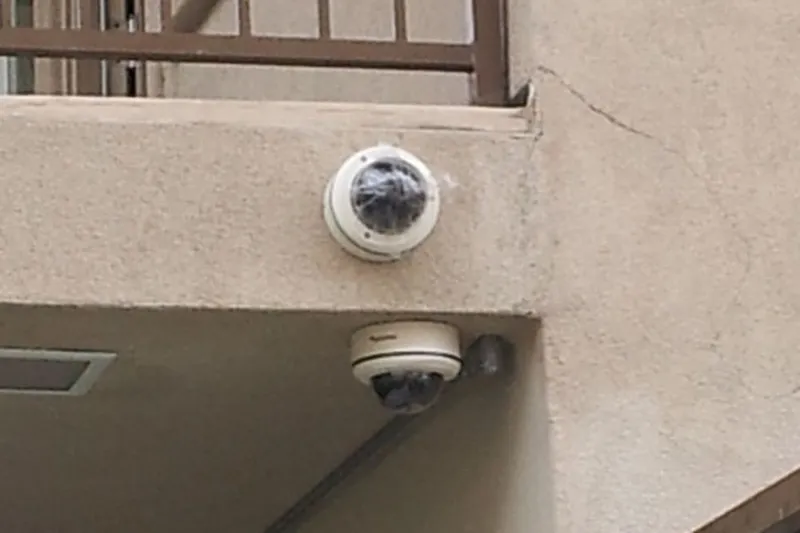
Visitors
Reception has to be on the path, not beside it
Visitor management is usually discussed as a software question — badges, sign-in tablets, a printed pass — and the software is the least important part of it. What decides whether visitors reach reception is the geometry of the campus and which doors open.
The arrangement that works is simple to describe and awkward to retrofit: one exterior door that can be opened on request during attendance hours, a video intercom on it so the office can see and speak to whoever is asking before releasing it, and every other exterior door on credential only with an alert if it is held open. Somebody arriving has exactly one way in, and it passes a desk.
How the arrangement fails
One door undoes the whole visitor route
It breaks in predictable ways. A side door nearer the car park than the office, propped every morning for deliveries. A gate left open through drop-off and never closed. A building on the far side of the site with its own entrance and no line of sight to anyone.
Those are survey findings, not product problems, and we would rather tell you that your visitor arrangement is being undone by one door than sell you a system that documents people walking past it. Contractors deserve their own mention here: a credential issued for the duration of the works, on the buildings the works touch, expiring on its own, removes the awkward conversation about keys at the end of a project.
The intercom that puts reception on the path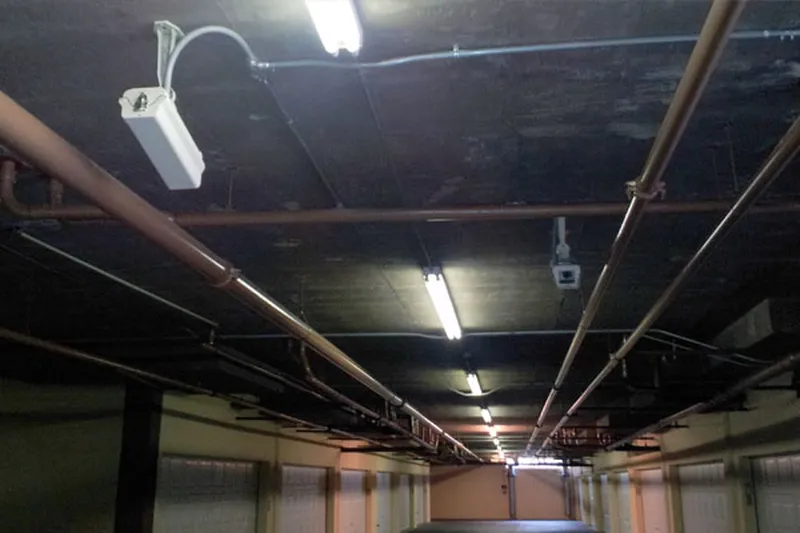
Out of hours
The empty campus is the one that gets visited
Evenings, weekends and the long breaks are when most of what happens to a campus happens, and it is the part that gets planned around the bell schedule. An empty site with a long perimeter, roof plant, copper, tooling, laboratory and workshop equipment, laptop trolleys and vehicles left on site is a straightforward target, and it is unobserved for days at a time.
- A recorder documents; it does not interrupt. If the requirement is that somebody stops what is happening while it happens, that is monitored live coverage during closed hours — an operator who can see an activation and speak into the space.
- Switch the access system to a break schedule. A credential that opens a building in term time should not open it in July. This is the cheapest single improvement on most campuses and it costs nothing but the administration.
- Cover the approach, not just the building. Whoever arrives out of hours crosses a car park or a fence line first, and that is where there is time to do something about it. Coverage that starts at the wall starts too late.
- Alarm the buildings that hold the equipment instead of uniformly alarming everything, which produces activations nobody responds to properly. Verified against the cameras, so an operator can see whether an activation is a person or a moth.
- Plan for summer works. Every campus has contractors on site through the break, doors open, and alarm zones disabled for weeks. That period needs its own arrangement, agreed in advance. The alternative is that the system is switched off and forgotten.
- Guarding stays a separate conversation. Where a site genuinely needs a physical presence, that is coordinated under the private patrol operator licence, BSIS PPO #121089, held by Guardian Integrated Security, Inc. San Diego CCTV Pros is a DBA of Guardian — the same company under its other licence, not a separate firm we refer you to. Guard work is Guardian's side of it, so we coordinate it and do not quote guard hours under this brand.
What a campus usually needs
- Doors, credentials and schedules. Exterior doors, interior boundaries, equipment stores and contractor access on one platform, with per-person rights, term and break schedules, and free mechanical egress at every controlled opening. That is commercial access control.
- Camera design and installation. Exterior, entrances, corridors, stairwells and car parks, specified against what each position has to achieve — and nothing pointed into teaching space. That is commercial security camera installation.
- The visitor entrance. A video intercom at the one door that opens on request, so the office can see who is there before releasing it. That is video intercom and door entry.
- Intrusion detection, verified. Monitored intrusion on the buildings that hold the equipment, checked against the cameras, so an activation is assessed. That is commercial alarm monitoring.
- Somebody watching the empty campus. An operator on the site during closed hours, able to see an activation and speak into the space, which interrupts an incident, not recording it. That is remote video monitoring.
- The cabling underneath all of it. Multi-building campuses mean inter-building runs, separately grounded structures and distances that decide copper against fibre per run. That is structured cabling.
Where a project runs across several buildings, the work is normally phased against the academic calendar, because the only sensible time to open ceilings and pull cable is a break. That scheduling is agreed at survey and written into the programme. If it is easier to start from the service than the vertical, the full list is on all commercial services, and the other verticals are on all industries.
Common questions
Campus security questions
Mechanically, it does one specific thing: a command from a defined trigger point tells the access controller to stop accepting credentials on the doors it is wired to, so those doors are secured from the outside without anybody walking to them. That is the whole of it. It does not lock a door the system is not wired to, it does not work on a door whose existing hardware cannot be secured electrically, and it does not do anything at all about egress — people inside can always get out, which is a life-safety requirement, not a design preference. Anything beyond that mechanical description is your plan, not our equipment, and we will not describe the function in terms of outcomes we cannot stand behind.
RelatedAccess control systems
No system makes a campus safe, and we will not sell you one on that basis. What the hardware provides is a way to secure a defined set of doors quickly without staff having to reach them, which is genuinely useful and genuinely limited. Whether it helps in a real situation depends on things that are not equipment: whether your written plan says who may trigger it and on what basis, whether people have practised, whether the doors in scope are the right ones, and whether the campus population knows what a lockdown means when it is called. We build the mechanism, tell you honestly what it covers, and leave the plan to you and whoever advises you on emergency operations.
RelatedAccess control systems
By making reception the only door that opens from outside during the day, and giving it the means to see who is asking. In practice that is a video intercom at the visitor entrance so the office can see and speak to somebody before releasing the door, every other exterior door on credential only, and a door-held-open alert on the ones that get propped. The physical routing matters more than any of the technology: if the shortest path from the car park to the classrooms does not pass the office, people will take the shorter path and no amount of signage changes that. We survey for exactly that and tell you which door is undermining the arrangement.
RelatedAccess control systems
Partly, and honesty about which part matters. Doors are propped because somebody has a real problem — carrying equipment between buildings, a delivery, a class moving, a door that is genuinely inconvenient — and a system that fights that behaviour loses. What works is making the propping visible: a door-held-open alert tells the office that a specific door has been open for longer than a delivery takes, so somebody walking past closes it that afternoon. Where a door is propped every single day at the same time, the answer is usually to change the door’s access rules.
RelatedAccess control systems
That is when most of what actually happens to a school happens, and it is the part a bell-schedule mindset tends to under-plan. An empty campus with a long dark perimeter, roof plant, copper, IT equipment in every room and vehicles left on site is a straightforward target, and a recorder only documents the visit. Monitored coverage during closed hours puts an operator on the site who can see an activation and speak into the space, which ends a great many incidents at the moment somebody realises a person is watching. Over a long break, the access system should also be switched to a break schedule, so a credential that opens a building in term time does not open it in July.
RelatedAccess control systems
No. Cameras belong on the exterior, the entrances, the corridors and stairwells, the car parks and the areas holding equipment worth taking. They do not go inside classrooms, restrooms, changing rooms or nursing and counselling offices. That boundary is not a per-site judgement; it is where we stop. Where a campus teaches minors there is a further question about recording them at all, in shared space as well as in rooms, and that one is not ours to answer — it is a governance decision for your board and your counsel. Give us their position in writing and we will design to it.
RelatedAccess control systems
With a door schedule before anything is bought. Most campuses have accumulated systems building by building as grants and budgets allowed, which means different credentials, different software, no shared record and no single place to remove somebody’s access when they leave. The useful first step is a survey that lists every exterior and interior controlled door, what hardware is on it now, what condition that hardware is in, whether it can be secured electrically, and what it would take to bring it onto one platform. That document usually reorders the priority list on its own, because it tends to surface doors nobody had counted.
RelatedAccess control systems
They should, and it is one of the clearest advantages an access system has over keys. Access is granted per person and per schedule, so a contractor’s credential works for the fortnight of the works and then stops, a term-time credential does not open a building during a break, and somebody who leaves is removed everywhere at once, not through a search for issued keys. Keys cannot do any of that: they get copied, lent, kept and handed on at shift change, and the only way to recover the position is to rekey the campus. The administrative discipline still has to exist — the system will do exactly what somebody tells it to.
RelatedAccess control systems
CSLB #976737 — C-7 low voltage — is the licence behind the camera, cabling and intercom installation. BSIS ACO #7501 is the Alarm Company Operator licence behind monitored CCTV, intrusion alarm and access control. Confirm either with the issuing state agency, not with us. Fire alarm is the exception that matters most on a campus, since doors, egress and fire detection are so often wired together there: we hold no C-10 or C-16, so a licensed fire alarm contractor takes that scope, not us. We work commercial premises only — school and campus buildings, never a private home.
RelatedAccess control systems