Commercial mobile surveillance
Mobile surveillance units for San Diego commercial sites
Self-contained camera units we own and deploy ourselves, for sites with no permanent power, no network and no reason to justify a fixed installation — construction, vacant property, temporary yards and events. Repositioned as the site changes, and watched live, not only recorded.
Mobile Surveillance
For sites that have no power, no network and no permanent structure yet
A fixed camera borrows almost everything from the building it is attached to: a wall to mount on, a circuit to draw power from, a cable path back to a recorder, and a network to carry the picture. A mobile unit is what you use when none of that exists yet, or will not exist for long enough to be worth building. The mounting structure, the power and the recording arrive with the unit.
That makes the qualifying question a practical one rather than a technical one. Is there a permanent structure to mount to, is there power at the point you need coverage, and will the site still be the same shape in a year. Early-phase construction, an open lot, a fence line around bare ground and a temporary yard all answer no to at least one of those, and that is the case a unit is built for.
These are our own units. We own them, we deploy them and we move them — we are not brokering somebody else's fleet. That changes how the service behaves in practice, because the person deciding where a unit stands is the person responsible for whether it works. Coverage moves as the site changes, which matters on a build where what is worth stealing in month two is somewhere else entirely by fit-out.
A unit that records and a unit that is watched are different purchases, and worth separating early. If the site eventually justifies a permanent system, the same survey work carries over into it.
That is with us. We will come back to arrange a survey. If it is urgent, call (858) 222-7547.
- CSLB C-7 #976737
- BSIS ACO #7501
- CMMC certified
- SAM.gov registered
- Est. 2008
The explainer
What a mobile surveillance unit actually is
A fixed camera borrows almost everything from the building it is attached to: a wall to mount on, a circuit to draw power from, a cable path back to a recorder, a network to carry the picture anywhere useful. That arrangement is why permanent systems are the right answer for permanent buildings.
A mobile surveillance unit is what you use when none of those things exist yet, or will not exist for long enough to be worth building. The mounting structure, the power, the recording and the connectivity travel with the unit, so a camera position can be established on ground that has no infrastructure at all — a graded lot, a fence line, the corner of a yard.
These are our own units. We own them, we deploy them and we move them — we are not brokering somebody else's fleet. That changes how the service behaves: the person deciding where a unit stands is the person who will be back to move it.
The survey, in short
Where a permanent installation is the better answer, you will be told
We look at the site, establish what the positions can see, check what the signal will support, and say plainly whether the coverage you want is available there.
Where a permanent installation is the better answer, you will be told that too. Commercial premises only, not private residences.
The permanent alternative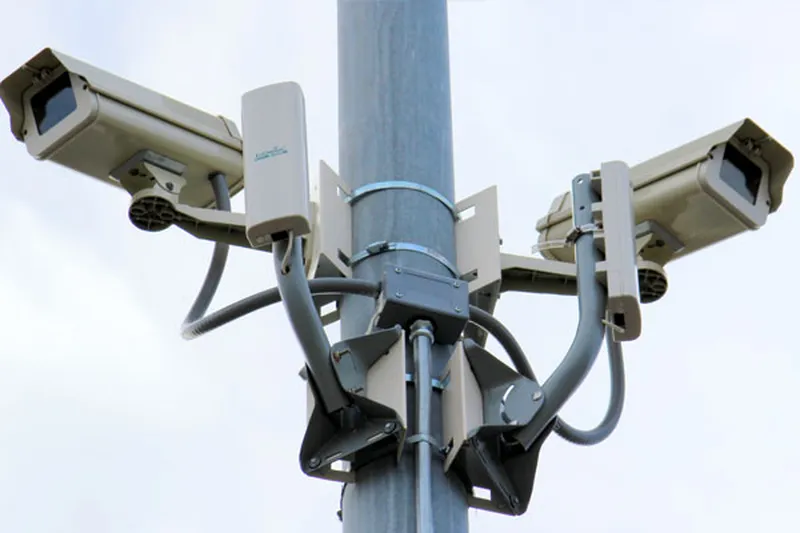
The decision
When a mobile unit beats a fixed installation
There is nothing to mount on
A permanent camera needs a structure. Early-phase construction, an open lot, a fence line around bare ground — none offers one. A unit brings its own.
There is no power, and no cable path
Running a supply and a cable route to a position is real work with a real cost, and it assumes the position is permanent enough to deserve it. Where it is not, the infrastructure is the expensive part of the decision.
The site changes shape
A gate that closes and reopens somewhere else, a compound that relocates, a stockpile that moves as the programme advances — a fixed position that was correct in phase one is aimed at history by phase three. A unit follows the risk.
The exposure is finite
A shutdown, a fit-out, a property between tenants, a season. Where the risk has an end date the coverage should too, and a capital install for a temporary problem is money on the wrong side of the balance sheet.
You need coverage now
A permanent system is designed, cabled, commissioned and handed over. Where a site is exposed while that happens, a unit covers the gap — the two are usually sequenced, not chosen between.
When it is the wrong answer
A permanent building with power, walls and a cable path should have a permanent system. A unit parked there for years is a worse camera at a higher cost than the one that should have been fixed to the wall, and we will say so at survey.
The infrastructure problem
No permanent power, no network, no problem to solve first
Most temporary sites end up with no cameras not because nobody wanted them, but because covering the site appeared to require solving two other problems first: getting power to the position, and getting a network connection to carry the picture. Both are jobs in their own right.
A unit removes that dependency by carrying its own power and its own connectivity, which is the entire reason the category exists. The coverage question becomes a coverage question again — where does the camera need to look, and at what hours. What a survey establishes is what the specific site can support:
- Where the unit can stand. Somewhere it will not be struck by plant, block a route or a fire lane, or have to be moved by somebody else at two in the morning because it is in the way.
- What the position can see. The convenient place to put a unit and the place that covers the gate are frequently not the same place. The sightline decides.
- Whether there is usable light. Detection at night is where temporary coverage most often quietly fails. Either the area has light or the position has to work without it, and that is assessed, not assumed.
- What the cellular signal will carry. Signal at a given corner of a given yard is a measured thing, and it decides whether the deployment is a response system or an evidence system.
- Who is responsible for it on site. Someone has to know the unit is there, why, and who to call about it. Deployments that skip this get moved into a corner facing a fence.
Where a site cannot support what you were hoping for, you are told at survey, not after the deployment. An area that cannot be covered properly yet is better to know about than a camera producing footage nobody can act on.
Where they earn their place
The sites mobile coverage is built for
Construction sites
High-value plant and copper, a perimeter that is a temporary fence, no permanent power early on, and nobody present for most of the hours the site is exposed. The detail sits on our page for construction site security.
Vacant and part-tenanted property
A building between tenants has nobody to notice a forced door, and the damage from a squat or a stripped copper riser is found days later. The exposure is real, finite, and rarely worth a capital install.
Temporary and overflow yards
Equipment, trailers and materials parked on ground that was not chosen for security. Yard and dock exposure is covered on our page for warehouse and logistics security.
Parking lots and structures
Large, poorly overlooked, and usually the part of a property the cameras were never extended to — because covering it meant trenching a cable route across it. A unit does not.
Events and seasonal retail
A compound, a pop-up, a seasonal lot — stock arriving somewhere with no security infrastructure, for a short period. Coverage that arrives and leaves with the operation is the shape that fits.
Vehicle and equipment lots
Open lots hold high-value stock in the open air with predictable closing hours and little perimeter. Dealership coverage is set out on our page for auto dealership security.
Through the programme
Deployment, and moving as the site changes
The failure mode of temporary coverage is not the equipment. It is a unit placed correctly once and never moved again while the site rearranged itself around it — until everybody believes the yard is covered and the camera is watching a corner that stopped mattering months ago. So repositioning is part of the service:
- Survey against the programme, not just the site. Where the moves are already known, the first placement can anticipate them.
- Place for sightline, then for convenience. A position that is easy to reach and covers nothing is worse than no position, because it is believed.
- Review at the changes already scheduled. Gate moves, compound relocations, phase handovers, a new stockpile — the trigger points are on somebody's programme already.
- Reposition, not re-specify. Moving a unit is a scheduling question. Because the units are ours, it does not become a commercial negotiation with a third party every time the site moves.
- Scale up and down with the exposure. Coverage that made sense during fit-out is often more than the occupied site needs.
- End the deployment when the reason ends. A unit still standing after the risk has gone is a line item nobody is reviewing.
Being visible, and being answered
A unit deters in two quite different ways, and only one of them works on its own. The distinction is worth understanding before you buy either.
Presence, and its limits
A unit is conspicuous by design, and that does some work: an opportunist choosing between two lots takes the one that is not obviously watched. But presence alone decays — anyone who visits twice and finds nothing follows has learned that nothing follows.
Lighting as a deterrent and as a tool
Light does two jobs — it makes a space less attractive to be in unobserved, and it is often what makes reliable detection possible at all. Where it is part of the deployment it is scoped against the area and the neighbours, not switched on at everything.
Live audio challenge
What actually ends an incident is a spoken challenge that is specific and evidently live — a person described by what they are wearing and told which part of the yard they are standing in. Their assumption that nobody is watching has just been disproved. That requires an operator.
A unit that is watched, not just a unit that records
This is the decision that determines whether a deployment was worth buying. A unit recording to itself on an empty site produces, at best, a video of your copper leaving. Nobody responds, the loss is found the following morning, and what you own is evidence of something you would rather have prevented.
The alternative is to put the feeds in front of an operator during the hours the site should be empty, which is what remote video monitoring does. Detection at the unit flags activity, an operator assesses it live, challenges over the on-site speakers where the plan calls for it, and escalates to your contacts or to law enforcement. Because the operator is describing an offence they can see, that call carries information a bell-only activation does not.
On a shut site, anybody present is worth looking at
Temporary sites suit monitoring better than almost anything else, because the detection question is unusually clean. On an occupied property an operator has to separate legitimate presence from intrusion all night.
On a shut construction site or a vacant lot there should be nobody there at all, so the question an operator has to answer is far simpler than the one an occupied building asks.
How a construction programme is covered
A schedule, not an always-on service
Monitoring is bought as a schedule, not as an always-on service, which is why it fits a finite exposure. Cover the hours the site is shut, the weekend, the holiday closure when a yard sits untouched and everybody local knows it.
A mobile deployment plugs into that same service. We do not publish response times, and you should be wary of anyone who does without saying how they measured them.
How the operators actually work
Handing over to a permanent system
Most mobile deployments on a construction programme have a successor. Planning for it early is the difference between a transition and a second project.
Design the fixed system while the walls are open
Pathways, back-boxes and cable routes are cheap before the building is closed up and expensive after. Settle the permanent camera design during construction, under commercial security camera installation.
The cabling is the long-lived part
Cameras change; the infrastructure under them outlasts several generations of them. Pathways, runs and labelling decide what the building can support in ten years — see structured cabling.
Scale down, do not rip out
As permanent coverage comes up, mobile coverage comes down area by area, so there is never a window where the site has neither.
The same contractor already knows the site
Having watched the approaches, the problem corners and the routes for the length of the programme is a design advantage. A system specified cold is specified from a drawing.
Monitoring carries across
The response plan, contact list and escalation thresholds built up during the temporary phase move onto the permanent cameras, not being rebuilt.
Where our scope ends
Equipment and camera work is CSLB C-7 scope; monitoring is BSIS ACO #7501 scope. We do not hold a C-10 or a C-16, so fire alarm work is coordinated with your own licensed fire alarm contractor, not performed or monitored by us. A physical guard response is a different licence again — BSIS PPO #121089, held by Guardian Integrated Security, Inc., of which we are a DBA. That is the same company under its other licence, not an outside provider, and guard work is Guardian's side of it: coordinated, never sold here.
What we will and will not tell you before a survey
Mobile surveillance is sold, more than most things in this industry, on numbers that cannot be true in advance. Coverage radii, runtimes, mobilisation windows and camera specifications all read well on a page and all depend on a site nobody has looked at yet.
Before anybody has looked at the site
Inventing the numbers would make this page more persuasive and less useful
What we will tell you beforehand: the units are ours, we deploy and reposition them ourselves, the coverage can be monitored live instead of only recorded, and which licence covers each part of the work.
What we will not tell you beforehand is what a unit will cover at your site, how long it will run, how quickly it can be on the ground, or what it costs. Those depend on the ground, the sightlines, the light, the signal and the hours.
Have the ground looked at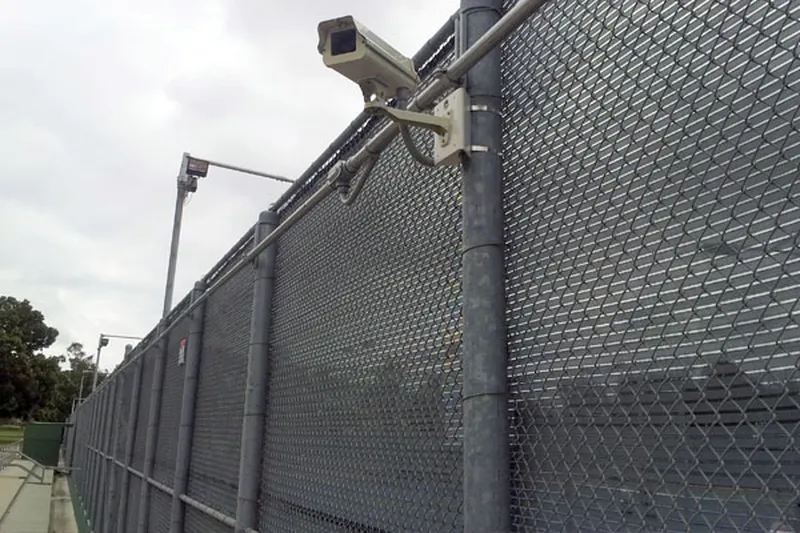
Common questions
Mobile surveillance questions
It is a self-contained camera position on a movable base, brought to a site that has no infrastructure to mount a permanent system on. Everything a fixed camera normally borrows from the building — the mounting structure, the power supply, the network connection, the recorder — travels with the unit instead. That is the whole idea. It means coverage can exist at a location where there is no wall to fix a camera to, no circuit to power it from and no cabling to carry it, and it means the coverage can be moved when the thing worth watching moves.
RelatedConstruction site security
We own them and we deploy them ourselves. That matters more than it sounds: when the units belong to the company doing the survey, the person deciding where a unit goes is the person who will be back to move it, and there is no third party in the middle when a position needs to change. It also means the camera work around the unit, the monitoring of what it produces and the permanent system that may eventually replace it are all the same contractor, under the same two licences — not three companies pointing at each other.
RelatedConstruction site security
Less than a fixed installation, but not nothing — the honest answer is that it gets established at survey, not promised in advance. The things that decide it are a stable place to stand the unit where it will not be struck by plant or block a route, a sightline that actually covers what you care about, enough light or enough imaging capability for the hours that matter, and a cellular signal good enough to carry what the coverage is meant to do. A site where the signal will not support live viewing can still be covered: it becomes a recording position, not a monitored one, and we will tell you which one you are getting.
RelatedConstruction site security
We do, and it is planned, not reactive. A site that changes shape — a compound that moves, a gate that closes and reopens elsewhere, a stockpile that relocates — makes yesterday's position wrong, and a unit pointed at what mattered three months ago is worse than no unit, because everybody assumes the area is covered. The workable arrangement is a review at the points where the site is already scheduled to change, with repositioning treated as part of the service. Because the units are ours, moving one is a scheduling question.
RelatedConstruction site security
Either, and the difference is the single biggest decision you will make about the deployment. A unit that only records is an evidence system: it tells you afterwards what happened, which is worth having but does not stop anything. A unit whose feeds go to remote video monitoring is a response system — an operator sees the activity while it is happening, can challenge over the on-site speakers where that is appropriate, and can escalate to your contacts or to law enforcement. On an empty site out of hours, where anybody present is by definition worth looking at, the monitored version is usually what people actually wanted when they asked for cameras.
RelatedConstruction site security
For as long as the exposure lasts, and that is agreed with you, not fixed by us. Some deployments are a few weeks around a specific risk — a shutdown, a fit-out, a property sitting empty between tenants. Some run the length of a construction programme and move several times within it. What we would rather avoid is the arrangement nobody revisits, where a unit sits in a corner of a yard long after the reason for it ended. Deployments get reviewed, and if the honest answer is that the site no longer needs one, that is the answer you will get.
RelatedConstruction site security
No. A guard does things a camera cannot. A guard can physically intervene, escort someone, control a gate by hand, check a door out of camera view, and make judgment calls that require being present. A camera position cannot do any of those things. What a unit does is cover ground continuously without a patrol period for anyone to learn, and hold that attention through a long quiet night. Where a site genuinely needs a person, it needs a person, and that is coordinated under the private patrol operator licence, BSIS PPO #121089, held by Guardian Integrated Security, Inc., of which we are a DBA — the same company under its other licence, and not something we sell under this brand.
RelatedConstruction site security
CSLB #976737, the same C-7 low voltage licence that covers a fixed installation. A trailer is not a building, which raises the reasonable question of whether contractor licensing applies at all — it does, because what is being installed is a low-voltage camera and transmission system, and the licence follows the work, wherever it is bolted. Where the unit is monitored rather than just recording, that side sits under BSIS ACO #7501.
RelatedConstruction site security
Area by area, as the permanent coverage that replaces them comes up — not all at once on the last day. The failure mode worth avoiding is a window in which the units have gone and the fixed system is not commissioned yet, which is exactly when a site holding finished, boxed, resaleable goods is at its most exposed. So the sequence is planned: the permanent design settled while the walls are still open, the fixed cameras brought up in the areas that are ready, and the mobile coverage withdrawn from those areas as that happens. What stays with you is the response plan and the contact list, which move onto the permanent cameras, not being rebuilt from nothing.
RelatedConstruction site security
Related services
Other commercial services
Licence Plate Recognition
Plate-reading camera positions for commercial gates, yards and lots — designed as their own position with their own lens, angle and lighting, and confirmed at survey. We do not sell plate capture as a feature with a specification attached.
Panic & Duress Buttons
Fixed and mobile duress devices for commercial premises — silent hold-up alarms at counters and reception, wearable and app-based buttons for staff who move, wired into monitored alarm response and paired with camera verification. Installed and monitored under ACO #7501.
Remote Video Monitoring
Off-site operators watching commercial camera feeds live rather than reviewing them after the fact — event-driven response, audio talk-down, verified escalation to police, and after-hours cover for sites nobody is standing on. Runs on the cameras you already have.
Video Analytics
Detection running on the cameras and recorders you already have — person and vehicle classification, line crossing, intrusion zones, loitering, people counting and heat mapping. What makes a monitored system event-driven instead of a wall of screens nobody watches.