Commercial video analytics
Video analytics for San Diego commercial sites
Detection that can tell a person from a passing car and both from a branch moving in the wind — line crossing, intrusion zones, loitering, people counting and heat mapping, running on the cameras you already own. It is what turns a recording system into one that raises events worth responding to.
Video Analytics
Detection you can act on, rather than motion you learn to ignore
Video analytics is software that classifies what a camera is looking at, so a system can act on some things and ignore the rest. The useful version separates a person or a vehicle from everything else in the frame. That distinction is the whole product: without it, a camera reports movement, and movement includes headlights sweeping a wall, a branch in the wind and rain crossing the lens at night.
The consequence of unclassified motion is not a technical inconvenience. It is that nobody trusts the alerts, so nobody acts on them, and the system quietly becomes a recording you review after a loss instead of something that interrupts one. With classification, a camera can raise an event that means something — a line crossed, a zone entered, somebody loitering at a boundary after hours.
Whether it works at your site is decided by the site rather than by the software. Camera angle, mounting height, lighting at the hour that matters, and how much of the frame is occupied by the thing you care about all bear on it. We will tell you which of your existing positions can carry analytics and which cannot, which is a more useful answer than a feature list.
Analytics are also the input to a monitored service rather than a replacement for one — detection is not response. Separately, people counting and heat mapping are commercial measurements taken with the same equipment, and have nothing to do with security at all.
That is with us. We will come back to arrange a survey. If it is urgent, call (858) 222-7547.
- CSLB C-7 #976737
- BSIS ACO #7501
- CMMC certified
- SAM.gov registered
- Est. 2008
The explainer
What video analytics actually does
Video analytics is software that classifies what a camera is looking at, so a system can act on some things and ignore the rest. The useful version separates a person or a vehicle from everything else a camera picks up: wind in a tree, rain on the lens, a cat, headlights sweeping a wall, a flag on a pole, a shadow moving across a yard as the sun goes down.
The second thing analytics do has nothing to do with security at all. Counting people through an entrance and mapping where they go inside a space are commercial measurements taken with equipment the building has already bought. Those sit at the end of this page, because they are a different purchase made by different people for different reasons.
What analytics are not is a replacement for someone acting on what is detected. The detection is the input; the response is a separate thing, and it is set out under remote video monitoring.
A small distinction, and the whole product
From reviewing a loss to interrupting one
Without classification, a camera is a recording you look at afterwards, because nothing it reports is reliable enough to act on.
With it, a camera can raise an event that means something — and a site moves from reviewing footage after a loss to interrupting the thing that causes one.
Interrupting it, not logging it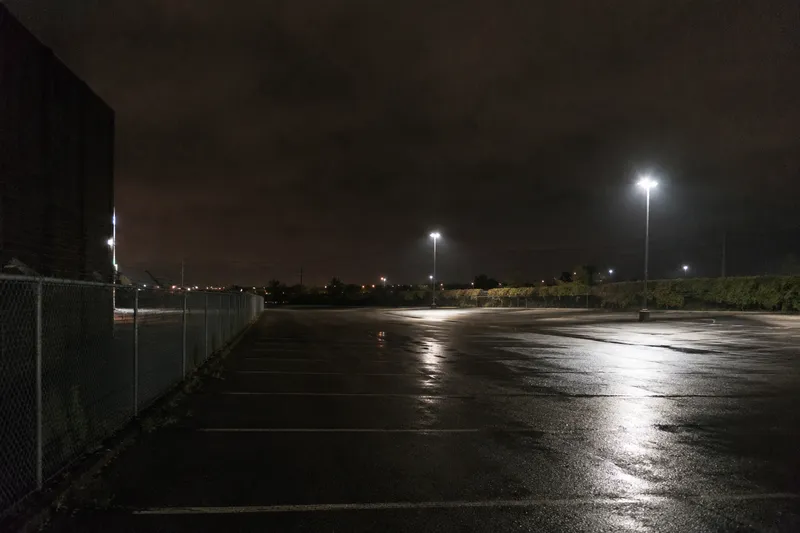
The distinction that matters
Classification versus the motion detection you already have
Pixel motion alarms on change
Basic motion detection compares one frame with the next and reports when enough of the picture has changed. It has no idea what changed, so rain, foliage, shadows and headlights all qualify — and so does the thing you actually care about, buried among them.
Classification alarms on what it is
Analytics work out whether the moving thing is a person, a vehicle or neither before deciding whether it matters. That is the difference between an alert worth reading and a notification everybody has learned to dismiss.
An alert nobody trusts is worse than none
A feed that cries wolf trains every person who sees it to ignore the one that counts, and it does that within days. Detection quality is not a refinement on top of a monitoring service — it is the ceiling on how well that service can possibly work.
The security set
The analytics that raise events
These are the commonly deployed detections. Which of them suit a given camera depends on the position, the field of view and the lighting, and that is established at survey, not promised in advance.
- Person and vehicle classification. The foundation everything else sits on. Knowing which of the two you are looking at changes what should happen next — a person in a yard at three in the morning and a delivery vehicle at the gate are not the same event.
- Line crossing. A boundary drawn on the view, alarming when something crosses it, usually with a direction attached. It suits fence lines, gate openings and thresholds where the crossing itself is the thing that matters.
- Intrusion zones. An area drawn on the view where a classified object should not be at certain hours. It suits yards, compounds, roof access and plant enclosures — anywhere that has a clear "should be empty" period.
- Loitering. Something remaining in an area longer than it should. Useful precisely where presence alone is not suspicious but dwelling is: an entrance lobby, a car park, a cash machine approach, a service yard.
- Object left or removed. Something appearing in a scene and staying, or something that was there going missing. It is sensitive to how busy the scene is, and it suits views that are otherwise static.
- Tampering and view change. A camera covered, sprayed, turned or obstructed. This one matters more than it sounds — a defeated camera looks exactly like a working one on a recorder nobody is watching.
The limits
What decides whether it works at your site
The angle and the field of view
A camera aimed to capture a recognisable face at a door is frequently the wrong angle for classifying a person crossing a yard. Evidence positions and detection positions are different jobs, and one camera often cannot do both well.
Light, and the change in it
Detection at night is where most analytics propositions quietly fail. So is the half hour when a low sun is in the lens, which produces the same false event at the same time every evening until somebody notices the pattern.
What else is in the frame
A public pavement inside a zone alarms on the public. A road behind a fence line alarms on traffic. A tree alarms whenever it is windy. These are geometry problems solved by where the zone is drawn, not by better software.
Where the analytics run
On the camera, on the recorder, or on a server alongside them. Which of those your existing equipment supports is one of the first things established, because it decides how much of the estate can be brought into the arrangement.
Weather and the site itself
Heavy rain, fog, blown dust and a lens that has not been cleaned all degrade classification. A maintenance regime is part of an analytics deployment, not an afterthought to it.
Tuning is ongoing, not a switch
Zones, lines, object classes and which hours count get adjusted against what actually happens on the site over the first period of operation. Set once at commissioning and left, any analytics deployment drifts into noise.
Where the value lands
Analytics are what make a monitored site work
So the sequence is: the analytic detects and classifies at the site, the event pushes a live view to an operator, the operator assesses what is actually there, and a response plan agreed in writing decides what happens next — an audio challenge, a call to your named contacts, escalation to law enforcement where what they are watching justifies it. That whole second half is remote video monitoring, and it is a separate service that this one feeds.
The same detections improve an intrusion system. An alarm activation on its own is an assertion that something happened; paired with a classified detection and a camera view of the same zone it becomes an observation, which is what video verification means in practice. That pairing is set up under commercial alarm monitoring.
We do not publish response times anywhere on this site, and analytics do not change that. What we will do is agree the plan with you in writing and tell you plainly what the detection can and cannot be relied on to do at each position.
Nobody watches every camera on every site
Analytics are the thing standing between a monitoring service that works and one that generates noise. An operator cannot watch every camera on every site continuously, and nobody claims otherwise.
What an operator can do is respond well to events that are worth responding to — which means something has to decide, at the site, which events those are.
People counting and heat mapping
These are commercial measurements taken with cameras the building has already bought. Different buyer, different purpose, same equipment.
People counting
How many people pass an entrance, by hour and by day. It is used for staffing decisions, opening hours, and understanding what a quiet period genuinely looks like, not what everyone assumes it looks like.
Heat mapping
Where people spend time within a space. Retail and property operators use it for layout, dwell and identifying areas nobody goes to — the aisle end that is being ignored, the amenity nobody uses.
Position it deliberately
A camera positioned for security is frequently not positioned for counting: overhead and straight down is good for counting and poor for identification. Where a site wants both, it usually wants two positions, and it is cheaper to know that at design.
Where analytics earn their place
The clearest wins are sites with a defined perimeter and long periods when nobody legitimate should be present, because the detection question is unusually clean — anybody there is worth looking at.
Yards, docks and trailer areas are the archetype: large, poorly overlooked, and busy with scheduled movement during the day and none at night. That pattern is set out under warehouse and logistics security. Open vehicle lots have the same shape with higher-value stock in the open air, covered under auto dealership security. Temporary sites with a fence-line perimeter and nobody present overnight are covered under construction site security.
Where positions need to change or be added before analytics are worth buying, that work sits under commercial security camera installation, and existing systems with faults that cause dropouts get fixed under CCTV maintenance and repair rather than papered over with software.
An occupied building has no clean empty period
A building with people in it around the clock has no clean "should be empty" period, so whole-site detection produces constant legitimate events.
There the value sits in specific areas and specific hours — a plant room, a roof, a refuse enclosure, a car park after midnight — instead of in blanket coverage.
What we will and will not tell you before a survey
Analytics are sold harder on numbers than almost anything else in this industry, and the numbers are the part that does not survive contact with a real site. We would rather be less impressive here and right on the day.
What we will tell you beforehand: which analytics exist and what each is for, that they generally run on the cameras you already own, which licence covers which part of the work, and that tuning is ongoing rather than a setting. What we will not tell you beforehand is how accurate detection will be at your site, how far a given camera will classify reliably, or what proportion of events will turn out to be nothing — because all of those depend on positions, lighting, weather and what else moves in the frame, and inventing them would make this page more persuasive and less useful.
The survey, in short
Said at survey, not discovered in the first week of alerts
We look at the existing cameras and recorder, establish what they can support and which positions are actually good for detection, and tell you plainly which analytics are realistic where.
Where a position cannot support what you want, that is said at survey — never discovered in the first week of alerts. Commercial premises only, not private residences.
Have the existing cameras assessed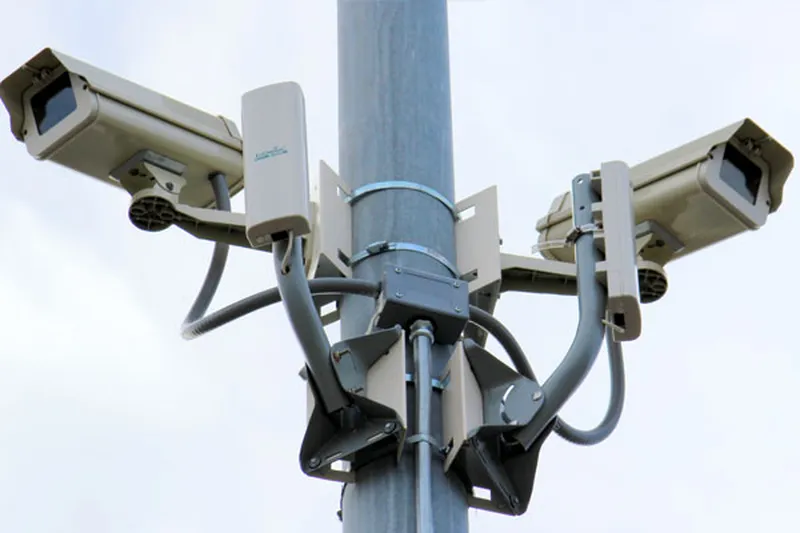
Common questions
Video analytics questions
It is software that looks at a camera feed and classifies what it is seeing, so that a system can act on some things and ignore others. The useful version of it distinguishes a person or a vehicle from everything else a camera picks up — wind in a tree, rain on the lens, a cat, headlights sweeping a wall, a flag. Once the system can tell those apart, a camera stops being a recording you watch afterwards and becomes something that can raise an event worth responding to while it is happening.
RelatedRemote video monitoring
Basic motion detection compares one frame to the next and alarms when enough pixels change. It cannot tell you what changed, which is why it alarms on rain, moving foliage, shadows and passing headlights, and why most sites that enable it turn the notifications off within a fortnight. Classification-based analytics work out what the moving thing is before deciding whether it matters. That single difference is what makes an alert worth reading, and it is the reason a site can go from ignoring its cameras to acting on them without changing a single camera.
RelatedRemote video monitoring
The commonly deployed set is person and vehicle classification, line crossing where something moves across a boundary you have drawn, intrusion zones where something enters an area it should not be in, loitering where something stays in an area longer than it should, and object left or removed. Alongside those sit the counting analytics — people counting through an entrance and heat mapping of where people go — which answer commercial questions, not security ones. What a given camera can support depends on the camera, the recorder and the position, and that is established at survey.
RelatedRemote video monitoring
Often, yes. What decides it is whether the analytics run on the camera itself, on the recorder, or on a server alongside them, and which of those your existing equipment supports. Just as important is whether the position is any good for detection: a camera aimed to capture evidence of a face at a door is often the wrong angle and the wrong field of view for reliably classifying a person crossing a yard. We survey both questions before quoting, and where a position needs to change we will say so instead of running analytics on a view that cannot support them.
RelatedRemote video monitoring
We are not going to give you a number, and we would treat anyone who does with caution unless they measured it at your site. Detection performance depends on the camera, the lens, the angle, the distance to the thing being classified, the lighting through the day and night, the weather, and what else is moving in the frame. The same software on the same camera performs differently pointed across a lit yard and pointed into a dark car park with a road behind it. What we will do is look at your positions, tell you which ones can realistically support which analytics, and tune the result against what actually happens on your site over the first period of operation.
RelatedRemote video monitoring
Mostly geometry and light, not software. A zone drawn to include a public pavement will alarm on the public. A line drawn across a view where a road runs behind the fence will alarm on traffic. A camera pointed at a tree will alarm whenever it is windy, and one pointed into a low sun will alarm at the same time every evening. Tuning is therefore mostly design work: where the zones and lines are drawn, what classes of object count at which hours, what the camera can see, and what lighting exists. It is done against real activity on the site — never set once at commissioning and left.
RelatedRemote video monitoring
They answer commercial questions, not security ones, using cameras you have already bought. People counting through an entrance tells you how busy a site actually is by hour and by day, which is used for staffing, opening hours and understanding what a quiet period really looks like. Heat mapping shows where people spend time within a space, which retail and property operators use to understand layout, dwell and which areas are being ignored. Both are aggregate measurements of movement — not identification of individuals — and both are worth scoping deliberately, because a camera positioned for security is frequently not positioned for counting.
RelatedRemote video monitoring
No — it is what makes watching them practical. Nobody watches a wall of screens for a whole shift and sees everything on it; that is a fact about human attention, not a failing of any particular person. Analytics invert the problem: instead of asking an operator to notice something in a quiet frame, they hand the operator a frame that has already been flagged. The detection is the input and the person is the response, and the two are bought together. What the operator then does — assess, challenge, escalate, document — is the monitoring service. The analytics stop at the alert.
RelatedRemote video monitoring
Analytics are software running on hardware we are licensed to install, so the answer is CSLB #976737 for the cameras and recorders, and BSIS ACO #7501 where those detections are watched and acted on by operators. Worth one extra sentence on this page specifically: "detection" is a word buyers associate with smoke and fire, and video analytics have nothing to do with either. Fire needs a C-10 or a C-16 and we hold neither.
RelatedRemote video monitoring
Related services
Other commercial services
Licence Plate Recognition
Plate-reading camera positions for commercial gates, yards and lots — designed as their own position with their own lens, angle and lighting, and confirmed at survey. We do not sell plate capture as a feature with a specification attached.
Mobile Surveillance Units
Self-contained camera units we own and deploy to sites with no permanent power, no network and no reason to justify a fixed install — construction, vacant property, temporary yards and events. Repositioned as the site changes, and watched live rather than only recorded.
Panic & Duress Buttons
Fixed and mobile duress devices for commercial premises — silent hold-up alarms at counters and reception, wearable and app-based buttons for staff who move, wired into monitored alarm response and paired with camera verification. Installed and monitored under ACO #7501.
Remote Video Monitoring
Off-site operators watching commercial camera feeds live rather than reviewing them after the fact — event-driven response, audio talk-down, verified escalation to police, and after-hours cover for sites nobody is standing on. Runs on the cameras you already have.