Commercial gate access control
Commercial gate access control systems in San Diego
Access control at the vehicle gate and the perimeter — readers, keypads, mobile credentials, transmitters and telephone entry, wired and commissioned to work with your gate equipment and its safety devices. We do the access control; the gate operator stays with your gate contractor.
Gate Access Control
The access control at your gate, and the gate itself, are two jobs
This distinction gets blurred constantly in the way these systems are sold, and blurring it causes real problems on real projects. The access control decides who comes through the perimeter and records that it happened — the reader, keypad or entry station, the controller behind it, the credentials and the log. The gate is the operator, the leaf, the loops and the safety devices. The access control tells the gate to open. It is not the gate.
We do the first and not the second. We wire and commission to your gate equipment and its installer, and we will say plainly where a fault belongs to the operator rather than to us. Sites where nobody drew that line before work started are the ones where two trades spend a week pointing at each other.
The design question at a vehicle gate is different from the one at a door, because a driver presents a credential from inside a cab, at a height and reach set by the vehicle, in weather, usually with somebody waiting behind them. The test is not how secure a credential is in principle. It is whether a driver will use it properly at seven in the morning with a truck behind them. Pedestrian entry is a separate opening and usually where identity actually has to be settled.
Telephone entry, directory calling, transmitters, mobile credentials and plate reading all have a place at a perimeter. Which of them fits depends on who arrives, how often, and whether they work for you.
That is with us. We will come back to arrange a survey. If it is urgent, call (858) 222-7547.
- CSLB C-7 #976737
- BSIS ACO #7501
- CMMC certified
- SAM.gov registered
- Est. 2008
The explainer
What a gate access control system is, and what it is not
A gate access control system decides who comes through the perimeter and records that it happened. The reader, keypad or entry station at the gate, the controller behind it, the credentials people carry, the interface to the gate equipment and the wiring between all of it — that is the system, and that is our work.
What it is not is the gate. This gets blurred constantly in the way these systems are sold, and blurring it causes real problems on real projects. The access control tells the gate to open. The gate leaf, the operator that moves it and the safety devices that stop it are separate equipment with a separate trade attached. We do not install gate operators, and the section below says so at length, not leaving you to find out.
Two transactions, one opening
A driver at a gate is not a person at a door
Vehicle and pedestrian entry are two separate problems. A driver presents a credential from inside a cab, at a height and reach set by the vehicle, in weather, often with somebody waiting behind them. A person on foot at a gate or a turnstile is a different transaction, and it is usually the pedestrian opening where the harder identity question lives.
- Reader height and reach are set by the vehicle, not by a person
- Weather, and a queue building behind the driver
- The pedestrian opening is where identity actually has to be settled
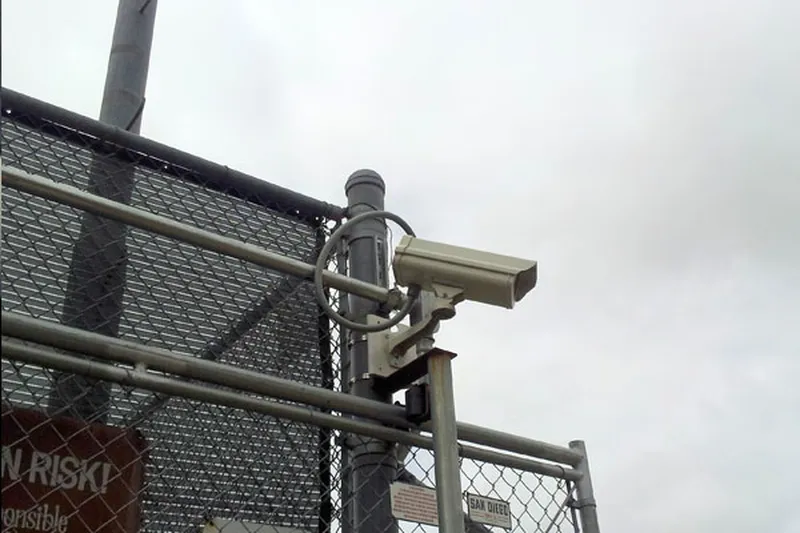
At the gate
Credentials that work from inside a vehicle
Cards and fobs
Familiar, cheap to issue and easy to revoke, which is their real advantage over a key. At a gate they involve reaching out of the window, so they suit light-traffic entrances and pedestrian side gates better than a busy vehicle lane.
Mobile credentials
The phone is already in the vehicle, which removes the object people forget. Issue and revocation happen remotely. Handing something over and hoping to get it back — the biggest administrative saving on a site with contractor turnover.
Keypads and codes
Workable as a secondary method, weak as a primary one. A code is shareable, does not expire on its own, and tells you that somebody who knew it came in — not who came in. Where a site insists, it is scoped narrowly and rotated.
Vehicle transmitters
The classic gate credential and still the most convenient for staff arriving daily. The weakness is that it is bound to the vehicle, so a transmitter left on a visor is a credential lent to whoever borrows the truck.
Plate reading
The credential becomes the vehicle itself, with nothing to present. It suits fleets and known regular vehicles, depends entirely on the entrance geometry, and always needs a fallback — the subject of its own section below.
Where biometrics sit
Generally not at a vehicle gate: a driver in a cab is badly placed to present a hand or a face. At pedestrian gates and turnstiles they are a serious option, and that is covered under biometric access control.
The visitor problem
Telephone entry and directory calling at the perimeter
Most sites do not have a credential problem at the gate. They have a visitor problem: somebody has to get to the entrance, work out who is there, and decide. Where the gatehouse is unstaffed for part of the day, that means a person walking or driving out to the gate every time — the cost nobody budgets for and everybody pays.
A telephone entry station moves the decision to whoever should be making it. The visitor calls from the gate, the call routes to a desk or a phone, and the gate releases once they have been seen and spoken to. On a multi-tenant site the same station carries a directory, so the call reaches the specific tenant, not a general number nobody owns. The design questions match those at a building entrance and are set out under video intercom and door entry systems.
- Decide who may release, and when. A gate anyone can open remotely at any hour is not access control. Scope it to named people and stated hours, and log it.
- Keep the directory current. On a multi-tenant site the list changes constantly, and a departing tenant left on it is an open route back in.
- Plan for the driver who cannot reach. Vehicle types vary more at a gate than anywhere else on a site, and the station position has to work for the largest of them.
- Getting a cable there is the real work. A gate is usually the furthest thing on a site from the comms room, and the route crosses ground, not running through a building. That is a pathway question before it is an equipment question.
Plate-based entry
Licence plate reading as a gate credential
What decides whether it works
Camera placement and angle, the lens, the lighting at that spot, and how fast a vehicle is moving past it. A position that performs at a controlled single-lane entrance may return nothing usable at a wide approach where vehicles arrive at an angle.
It is its own position
Plate reading is designed as a dedicated camera position with its own lens, angle and lighting, never expected as a by-product of general coverage. We tell you at survey which entrances can realistically support it, and which cannot. More under licence plate recognition.
It always needs a fallback
Any vehicle not on the list has to have a way in: a transmitter, a mobile credential, or the telephone entry station. On most sites the unlisted vehicle is the majority of arrivals, so the fallback is the main path.
The boundary that matters
We do the access control. We do not install gate operators.
This is the part of a gate project that goes wrong, and it goes wrong because two trades each assume the other has it. So it is stated exactly, not diplomatically.
We do the access control. We do not install gate operators.
What we do, under BSIS ACO #7501 and CSLB C-7: the access control system. Readers, keypads, mobile credentials and transmitters. The telephone entry station. The controller, the credential database and the permissions in it. The interfaces to the loop detectors and the safety devices. The low-voltage wiring for all of it, the pathways it runs in, and the commissioning that proves it works.
What we do not do: supply, install, service or automate the gate operator. The motor, the mechanical automation of the leaf, the gate itself and the posts it hangs on are not our work and we do not present them as ours. That equipment is supplied and installed by your gate contractor. Where an operator is already there, we integrate with it. Where one is going in, we coordinate with whoever is fitting it, which in practice means agreeing the interface, the power arrangements and the sequence of works before anybody is on site. Discovering a mismatch at commissioning.
A project with a clear division of scope finishes
We are not going to blur that boundary to look like a single source for the whole thing. A gate project with an honest division of scope finishes; one where both parties assumed the interface belonged to somebody else does not.
The same applies at the other end: we hold no C-10 and no C-16, so fire alarm work is out of scope entirely and any fire-service interface on a gate is coordinated with your own licensed fire alarm contractor. See the same credential, inside the building. Commercial premises only, not private residences.
The same credential, inside the building
Loops, photo eyes and safety edges
These belong to the gate equipment. The access system integrates with them, and never asks them to stand down.
Loop detectors
A sensor in the roadway that knows a vehicle is over it. Loops do several jobs — asking the gate to open from the inside, holding it open while a vehicle is in the opening, and telling the system the vehicle has cleared.
Photo eyes
A beam across the opening that detects something in the gate's path. It is a protective device, and its behaviour is a property of the gate equipment, not a setting the access system adjusts for throughput.
Safety edges
A contact strip on the leaf that responds when it meets an obstruction. With the photo eyes, this is what stands between a moving gate and a vehicle or a person, and it is treated as fixed.
Tailgating at a vehicle gate
The vehicle following a credentialed one through before the gate closes is the most common way a controlled perimeter is defeated. The answer is the loop logic and a camera view of the opening — never a shorter safety timing.
Free exit and emergency access
How a gate behaves for departing vehicles, and how emergency services get in, have consequences beyond convenience. Those are settled with the people who own them, not configured to whatever suits the access system.
What we will not do
Bypass, disable or time out a safety device to make an entrance flow better. If an entrance only works with a protective device defeated, the entrance is wrong, and the answer is to say so.
Multi-tenant gates, contractors and visitor access
The operational pattern differs by site type. Yards, docks and driver traffic are covered under warehouse and logistics security. Resident parking, guest access and shared gates on managed residential property sit under multifamily and apartment security. Temporary compounds, gates that move as the site changes and a workforce that turns over weekly are covered under construction site security.
Somebody has to own the credential list
A gate shared by several tenants is an administrative problem before it is a technical one. Everyone wants their own people through without friction, nobody wants to be responsible for the contractor who propped it open, and the credential list grows in one direction unless somebody owns it.
What makes these sites work is deciding in advance who may issue a credential, who may release the gate remotely, and how a credential comes back. Time-limited access for contractors and deliveries is the most useful control available, because it removes the recovery step entirely — a credential that expires on Friday does not need chasing. See plate reading as a contractor credential.
Plate reading as a contractor credential
Retrofitting access control onto an existing gate
Most sites already have a gate and an operator. The question is what the existing installation will support, and that is answered by looking at it, not by assuming.
What the operator presents
Existing gate equipment offers some way to be told to open. What that interface is, and whether it is available and documented, is the first thing established — and it is a question for your gate contractor as much as for us.
What is already in the ground
There is usually something wired to a gate already. Whether it can be reused depends on what it is, what condition it is in and whether it verifies end to end — which is a test, not an assumption.
The pathway back
A controller and a network connection have to reach the entrance. On a gate that route crosses open ground, so the pathway is designed, not improvised. Cable selection and certification sit under structured cabling.
Power at the entrance
What is available at the gate, and what it is already carrying, decides a good deal about what can be added there. It is established on site.
Keeping the safety devices as they are
A retrofit reads the existing protective logic and works within it. A design that would only function by changing how a safety device behaves is not a design we will offer.
When the answer is no
Sometimes the existing equipment cannot support what you want. We will say so, say what would have to change, and let you take that to your gate contractor.
Cameras, alarm, and one survey
A gate credential tells you a credential was used. A camera on the opening tells you what actually came through, which is how tailgating, a borrowed transmitter and a vehicle that is not what the list expects get caught. Those positions are designed under commercial security camera installation, and where somebody watches them live, that is remote video monitoring.
Where the gate is one part of a wider credential system that also covers the building's doors, that system is commercial access control, and this page is the perimeter half of it, not a competing product.
Doing them together
One survey, one contractor, one set of licences
The practical argument for doing these together is narrow and real: one survey, one contractor, one set of licences, and no argument later about whose device caused a fault.
The start is the same in every case — a look at the actual entrance, the actual gate equipment and what is already installed, then a written account of what can be integrated, what has to change, and which parts sit with your gate contractor.
Request a site survey
Common questions
Gate access control questions
The parts that decide who gets through the perimeter and record that it happened: the reader, keypad or telephone entry station at the gate, the controller behind it, the credentials themselves, the interfaces to the gate equipment and its safety devices, and the wiring and commissioning that ties it all together. What it does not include is the gate. A gate access control system tells the gate to open; the gate leaf and the operator that moves it are separate equipment with a separate trade attached, and that distinction is worth being clear about before anybody quotes.
RelatedLicence plate recognition
No. We do not supply, install, service or automate gate operators, motors or gate leaves, and we would rather say that plainly than let it be assumed. Our scope is the access control on your gate: readers, keypads, mobile credentials, transmitters, telephone entry, the controller and credential database, the interfaces to the loop detectors and safety devices, the low-voltage wiring and the commissioning. The operator itself is supplied and installed by your gate contractor. Where you already have one, we integrate with it. Where one is going in, we coordinate with whoever is fitting it so the two systems are designed to meet — not discovered to be incompatible on the day.
RelatedLicence plate recognition
Three things change. The credential is presented from inside a vehicle, so anything requiring a driver to reach out, wind down a window or get out is a design failure at a busy entrance. The environment is outdoors and unsupervised, so equipment takes weather and impact an interior reader never sees. And the gate is a moving mechanism with safety devices attached, which means the access system is not simply switching a lock — it is one input into equipment that has its own protective logic, and that logic is never overridden to make an entrance flow better.
RelatedLicence plate recognition
It depends on who is arriving and how often. Staff arriving daily want something that does not require stopping and reaching — a vehicle-bound transmitter, or a mobile credential handled from the phone already in the cab. Contractors and irregular visitors are better served by telephone entry, because a credential you have to issue and later recover is a credential that quietly never comes back. Codes are the weakest option at a gate for the same reason they are weak at a door: a code is shareable, it does not expire on its own, and it tells you that somebody who knew it came in, not who came in.
RelatedLicence plate recognition
Yes, and it is usually the main reason a site upgrades. A telephone entry station at the gate calls whoever is meant to answer, wherever they are, and the gate is released once the visitor has been seen and spoken to. For a site whose gatehouse is unstaffed outside certain hours, that converts a recurring interruption into something handled from a phone. The rules around it are worth setting deliberately — who may release, at which hours, and what gets logged — not left to whoever happens to pick up.
RelatedLicence plate recognition
Plate-reading gate access exists and works on the right entrance, but we will not sell it as a feature with a specification attached. Whether a plate is read reliably is decided by camera placement and angle, the lens, the lighting at that spot, and how fast a vehicle is moving past it — a position that performs at a controlled single-lane entrance may return nothing usable at a wide open approach. So it is designed as its own camera position with its own lens, angle and lighting, and we tell you at survey which entrances can realistically support it. It also needs a fallback for the vehicle that is not on the list, which on most sites is most of the arrivals.
RelatedLicence plate recognition
They are the devices that stop a gate closing on a vehicle or a person. A loop is a sensor in the roadway that detects a vehicle over it; a photo eye is a beam across the opening that detects something in the path; a safety edge is a contact strip on the leaf that responds to physical contact. They belong to the gate equipment, not the access system, and the access system integrates with them. We treat their behaviour as fixed: an access control design never asks for a safety device to be bypassed, disabled or timed out to make an entrance flow better.
RelatedLicence plate recognition
Almost every enquiry we take starts there. Most sites asking about gate access control already have a gate and an operator on it, and the question is whether the access system can be interfaced to what is there. What decides it is established at survey: what the existing equipment presents as an input, what is already wired to the gate and in what condition, whether there is a usable pathway back to a controller and a network, and what the safety devices are doing. Where the existing equipment cannot support what you want, we will say so and tell you what would have to change — and that conversation belongs with your gate contractor as much as with us.
RelatedLicence plate recognition
BSIS ACO #7501 — our Alarm Company Operator licence — is the California licence covering access control work. CSLB #976737, our C-7 Low Voltage Systems contractor's licence, covers the low-voltage installation and the wiring underneath it. Confirm either directly with the state; we'd rather you did. The access control itself — credentials, telephone entry, loop and safety-device interfaces, wiring — is performed under those two licences. The gate operator is a different trade: we don't supply or install it, and that stays coordinated with your gate contractor. No C-10, no C-16 on our end either, so any fire-service interface on a gate goes to your own licensed fire alarm contractor. Commercial premises only.
RelatedLicence plate recognition
Related services
Other commercial services
Access Control Systems
Card, fob and mobile credential systems — readers, controllers, electric locking hardware, and integration with the camera system.
Biometric Access Control
Fingerprint, facial and palm credentials for the commercial openings where a credential must not be transferable — server rooms, cash handling, controlled inventory and pedestrian gates. Installed under ACO #7501, with the template storage and retention questions settled at design.
CCTV Maintenance & Repair
Scheduled preventive maintenance contracts and on-call repair for commercial camera systems — including systems we did not install. Camera replacement, cabling faults, NVR and storage failures, firmware and retention audits.
Commercial Alarm Monitoring
Central-station monitoring for commercial intrusion alarms — panels, contacts, motion and glassbreak detection, video verification against the camera system, and takeover of an existing panel. Intrusion only.